Bill seeks Parliamentary approval for EADB funding
The Bill seeks to strengthen accountability in the use of public funds.
by JULIUS OTIENO
Audio By Vocalize
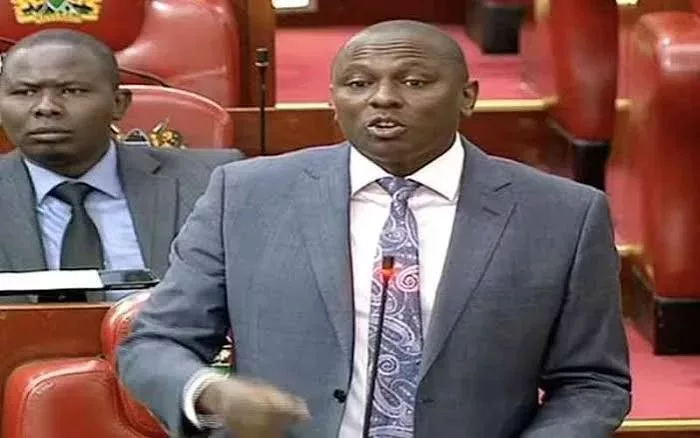
Majority Leader Kimani Ichung'wah
The National Assembly will have greater oversight over
public funds sent to the East African Development Bank (EADB) if a new Bill
before Parliament is approved.
The East African Development Bank (Amendment) Bill, 2026
seeks to require parliamentary approval before the National Treasury commits or
disburses money from the Consolidated Fund to the regional lender.
The Bill, sponsored by Majority Leader Kimani Ichung'wah,
also seeks to strengthen accountability in the use of public funds.
Currently, the Treasury Cabinet Secretary can authorise
payments to the bank without first obtaining the approval of the National
Assembly. The proposed law seeks to change that.
"The principal objective of this Bill is to amend the
East African Development Bank Act to require the approval of the National
Assembly prior to the Cabinet Secretary authorising a charge or issuance of
public funds from the Consolidated Fund to the East African Development
Bank," the memorandum to the Bill states.
It says the amendment is intended "to enhance
legislative oversight and accountability in line with the principles of public
finance as set out under the Constitution".
Under the Bill, the Cabinet Secretary for the National
Treasury will only make payments to the Bank after Parliament appropriates the
funds and the Controller of Budget approves the expenditure.
The Cabinet Secretary will also be required to submit an
annual report to the National Assembly.
The report must be presented within three months after the
end of every financial year. It will contain details of all payments made from
the Consolidated Fund to the Bank.
The Bill also introduces parliamentary oversight over
borrowing undertaken to finance Kenya's obligations to the Bank.
Where the Treasury intends to raise loans or issue
securities, it must first obtain the approval of the National Assembly.
The relevant parliamentary committee will have 30 days to
consider the request and table its report. If the House fails to pass a
resolution within that period, approval will be deemed to have been granted.
The Bill further provides that any money received from the
East African Development Bank, or raised through such borrowing, will be paid
into the Consolidated Fund.
The funds will then be available for use in accordance with
the law governing the Consolidated Fund.
The legislation also proposes amendments to the bank's charter.
It seeks to strengthen the protection of the bank's assets and operations in
member states.
One amendment grants the bank creditor status equal to that
enjoyed by international financial institutions such as the International
Monetary Fund, the World Bank, the International Development Association, the
African Development Bank and the African Development Fund.
The Bill also strengthens the bank's legal immunity.
It provides that the bank may only be sued where it has
expressly waived its immunity in writing. Even then, the waiver will not extend
to the execution of court orders against the Bank's assets.
The Bill further protects the bank's property and assets
from seizure, confiscation, nationalisation or other forms of government
action.
Its premises will also enjoy protection from searches,
except as provided under the Charter.
According to the memorandum, the proposed amendments are
aimed at safeguarding the assets of the East African Community and its
institutions.
The Bill states that it does not delegate legislative powers
or limit fundamental rights and freedoms.
It also states that the proposed law does not concern county
governments because it does not affect devolved functions.
The memorandum further notes that the amendments will not
result in additional public expenditure.
If enacted, the law will strengthen Parliament's oversight
of Kenya's financial commitments to the East African Development Bank while
enhancing legal protections for the regional lender and its assets.