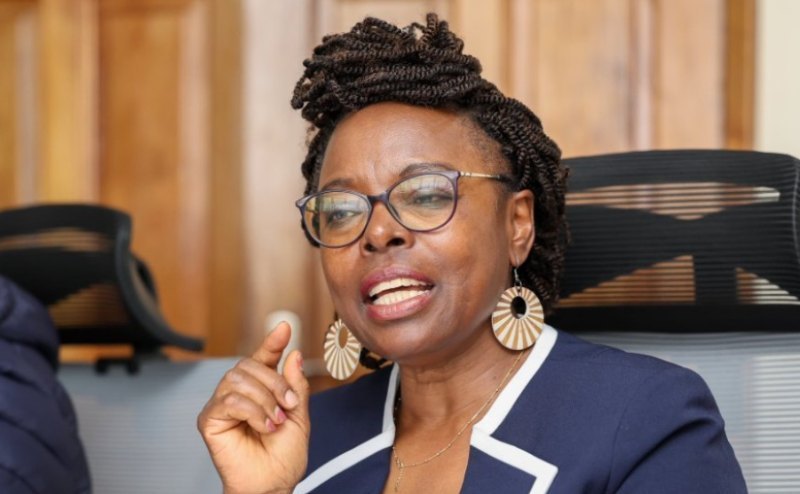
AS Kenya's digital lending industry enters a new phase, fintechs are shifting their focus from instant loans to sustainable business financing. Ugandan fintech—Numida chief operating officer Lorraine Mutambiranwa says the country's millions of MSMEs need financial partners—not just lenders—as the company expands into one of Africa's most competitive credit markets.
Kenya has built one of Africa's most sophisticated digital lending ecosystems, giving millions of individuals and businesses unprecedented access to credit through mobile technology. Yet despite the rapid growth of fintech innovation, many established micro, small and medium-sized enterprises (MSMEs) continue to struggle to secure financing that supports expansion rather than simply meeting short-term cash-flow needs.
The Ugandan fintech believes the next frontier in digital lending is no longer about making loans faster, but making them smarter and more responsive to the realities of growing businesses. Having financed more than 115,000 businesses and disbursed over $170 million (Sh 22 billion) across East Africa, the company has entered Kenya with a premium lending proposition targeting entrepreneurs seeking long-term growth capital.
The Star spoke to Mutambiranwa on her journey into fintech, why responsible lending is essential for sustainable growth, Kenya's evolving credit market, the financing challenges facing MSMEs and why she believes the future belongs to lenders that build relationships instead of simply processing transactions.
Excerpts:
Tell us about your journey into fintech and what attracted you to the sector?
I have spent much of my career helping organisations solve operational, transformation and growth challenges. What drew me into fintech was the opportunity to work on problems that directly affect people's lives. The first time you sit across from a business owner and hear how access to capital enabled them to hire employees, expand their premises or navigate a difficult period, the impact becomes incredibly real.
Fintech sits at the intersection of technology, business and human potential. At its best, it is not really about technology. Technology is simply the enabler. The real objective is expanding access to opportunity.
Entrepreneurs are builders. They create jobs, take risks and contribute to their communities every day. Helping them succeed creates benefits that extend far beyond individual businesses, and that's what continues to motivate me.
As a woman leading in fintech, what challenges and opportunities have shaped your career?
Like many women in leadership, there have been occasions where I found myself as the only woman in the room, although that is becoming less common, which is encouraging. Early in my career, I spent too much energy trying to fit traditional expectations of leadership. With experience, I realised that leadership is not about fitting a mould; it is about bringing your own strengths, perspectives and values. You don't need to be the loudest voice in the room to be an effective leader. Leadership requires clarity, consistency, curiosity and the courage to make difficult decisions. Representation also matters. Diverse leadership teams understand customers better because they reflect a wider range of experiences. Ultimately, I hope we reach a point where we stop talking about women leaders and instead focus on the value they are creating.
How do you balance ambitious growth targets with responsible lending?
I don't think those objectives compete with one another. Sustainable growth is built on responsible lending. At Numida, we are deeply customer-focused. We begin by understanding the entrepreneur, their business and their ambitions. For us, success is not measured simply by disbursing loans. A successful loan enables business growth while remaining affordable and being repaid successfully.
Over-indebted customers may generate short-term growth for lenders, but they don't create lasting value. Responsible lending builds trust, and trust creates long-term partnerships. Those relationships ultimately benefit both entrepreneurs and lenders.
What problem was the company create to solve?
Across Africa, small businesses play a vital role in economic growth, yet many struggle to access financing because traditional lending models rely heavily on collateral, documentation and rigid assessment methods. Numida was founded to change that. Our founders believed technology could help us understand businesses differently and make financing available to entrepreneurs who were building strong businesses but remained underserved by conventional financial institutions. Our mission has always been to support ambitious entrepreneurs who deserve access to growth capital.
Why did Kenya emerge as your next market?
Kenya has one of the continent's most advanced financial ecosystems. Innovation is widespread, and entrepreneurs have access to numerous financial products. However, our research consistently revealed that many established business owners still felt underserved. These entrepreneurs had growing revenues, loyal customers and expansion ambitions but often found themselves choosing between slow traditional financing or digital loans designed mainly for short-term liquidity. We saw an opportunity to provide meaningful capital combined with technology, speed and long-term relationships.
Kenya is also one of Africa's most competitive markets. Rather than discouraging us, that competition motivates us to build better products and deliver stronger customer experiences.
How significant has your growth been?
To date, we have financed more than 115,000 businesses across Uganda, Rwanda and Kenya and disbursed more than $170 million (Sh22 billion) in loans.What matters most to us is not simply the volume of lending but what those loans represent. Every loan supports an entrepreneur purchasing inventory, investing in equipment, expanding operations or creating employment.
Kenya's MSME sector is vast. What financing challenges stand out most?
The biggest challenge is alignment. Kenyan entrepreneurs are ambitious, and there is certainly no shortage of lenders. The problem is that financial products don't always reflect the realities of running a business. Entrepreneurs manage seasonal demand, irregular cash flows, supplier relationships and working-capital requirements that don't fit neatly into traditional lending models.
Increasingly, the discussion is moving beyond access to finance. The real question is whether businesses can obtain the right financing at the right time in a way that supports sustainable growth.
How does your relationship-based model differ from Kenya's instant-loan culture?
Instant lending has played an important role in expanding access to credit and making borrowing more convenient. The difference is that instant lending is often built around a transaction, while our model is built around a relationship.
I recently met one of our customers in Machakos. Our discussion was not about how much he could borrow that day. We talked about opening another branch, purchasing equipment and planning future expansion. That is a very different conversation. Technology still allows us to make decisions quickly, but relationships enable us to understand businesses more deeply.
Why do many viable MSMEs still struggle to access credit despite Kenya's digital lending boom?
One misconception is that a viable business automatically qualifies as a lendable business. An entrepreneur may have strong demand and loyal customers but lack formal records or operate with irregular cash flows that traditional lending models struggle to assess. Technology allows us to develop a much richer understanding of businesses.
We can look beyond conventional indicators and better understand how businesses actually operate. There is also an important human dimension. Some of the most successful entrepreneurs I have met are builders, traders, and manufacturers, not financial experts. Our industry's opportunity is to understand businesses as they really are, rather than expecting entrepreneurs to fit historical lending models.
What mistakes do entrepreneurs commonly make when seeking finance?
Many entrepreneurs seek financing before clearly defining what problem they want the loan to solve. Funding inventory, equipment, expansion and temporary cash-flow gaps all require different financing approaches. Another challenge is understanding business numbers. Entrepreneurs don't need accounting degrees, but they should understand their revenues, costs, margins and cash-flow cycles. Most importantly, finance should be viewed as a tool and not the destination. The goal is to strengthen the business, improve resilience and create opportunities for future growth.
Are Kenyan businesses increasingly borrowing to expand rather than survive?
We are seeing encouraging signs. Many entrepreneurs are still managing day-to-day pressures, but an increasing number are borrowing to expand locations, purchase equipment, increase stock and serve more customers. Those are conversations about growth rather than survival. Business owners are becoming more strategic in how they use financing, and that is a positive development.
Looking ahead, what challenges do you foresee for Kenya's financial sector?
Kenya remains one of Africa's most innovative financial markets. However, I believe the next phase will be defined by trust. Customers increasingly expect stronger data protection, greater transparency and more responsible lending. Regulators are also strengthening oversight to ensure innovation protects consumers while encouraging growth. I also believe stronger credit information sharing will improve lending decisions and reduce over-indebtedness. The institutions that succeed over the next decade will be those that balance innovation with accountability.
Where do you see Numida in five years?
Five years from now, I expect Numida to be operating at a much greater scale across Africa. But success will not simply be measured by the amount of capital we lend or the number of markets we enter. Today, we are known primarily as a lender. In future, I would like us to become a broader financial partner supporting entrepreneurs throughout their growth journey with products that help them manage, strengthen and expand their businesses.
If you could change one thing about Kenya's business financing ecosystem tomorrow, what would it be?
I would broaden the conversation beyond access to finance. Capital is essential, but entrepreneurs also need information, networks, skills, markets and financial tools that help them make better decisions. I would also like to see continued progress in financial inclusion.