
Kenya's push towards becoming a vehicle assembly hub on Monday received a major boost after Japan agreed to a Sh22 billion financing.
The facility will channel more than Sh13 billion towards implementation of Kenya's National Automotive Policy, a key pillar of the Kenya Kwanza administration's industrialisation agenda aimed at creating jobs, building technical skills and reducing dependence on imported vehicles.
The bulk of the funds are earmarked for the government's automotive manufacturing programme and energy enhancement.
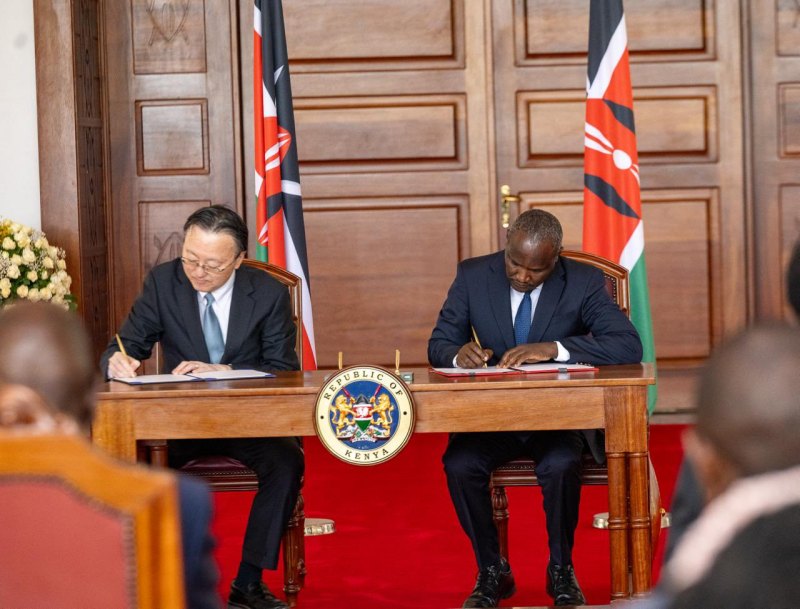
The agreement signed at State House Nairobi marks Kenya's first-ever Samurai loan arrangement and comes at a time when the government is seeking affordable sources of financing to support development programmes amid growing pressure on public finances.
President William Ruto said local vehicle assembly would help Kenya retain jobs and foreign exchange that currently leave the country through imports of fully assembled vehicles.
"For too long, Africa has imported what it could build and exported the jobs that come with it," said Ruto said.
"We will not simply import finished vehicles; we will assemble them here in Kenya by Kenyan workers."
The President said Kenya must shift from being largely a consumer of manufactured goods to becoming a producer capable of competing in regional and international markets.
He pointed to Kenya's trade relationship with South Africa, noting that while Kenya exports tea, coffee, flowers and edible oils, it imports far more manufactured products, including vehicles, machinery, iron and steel products.
Ruto argued that expanding local assembly would help narrow such trade imbalances while supporting the growth of Kenya's manufacturing sector.
The financing agreement, signed between the Government of Kenya and Japan's Nippon Export and Investment Insurance, is the culmination of negotiations that began ahead of the Ninth Tokyo International Conference on African Development (Ticad 9) in 2025.
Beyond the automotive sector, Japan will provide Sh5 billion to support the Reduction of Energy Losses Programme, which seeks to improve efficiency in electricity transmission and reduce power losses across the national grid.
The programme will help improve the reliability of electricity supply and lower costs for businesses and households.
A further Sh4 billion will be directed towards supporting government reforms and development programmes.
Treasury Cabinet Secretary John Mbadi described the financing as an important addition to the government's efforts to secure cheaper and more concessional funding.
Mbadi said Kenya could return to the Japanese market for additional financing in the next financial year as the Treasury seeks alternatives to expensive commercial borrowing.
"Going forward to the next financial year, we have given indication that we would want to be more involved in getting more funding for budgetary support," he said.
According to the Treasury, Samurai financing offers relatively favourable borrowing terms compared to many commercial loans available in international markets.
The deal comes as the government continues to navigate a challenging financing environment characterised by high global interest rates and increased scrutiny of sovereign debt.
It also arrives as Kenya awaits a decision by the World Bank on a proposed $750 million financing package expected before the end of June.
The Japanese funding not only provides relief for the Treasury but also signals confidence in Kenya's economic reforms and industrialisation agenda.
The agreement further deepens economic ties between Kenya and Japan, which has emerged as a key partner in infrastructure, energy, manufacturing and healthcare development.
Beyond the loan agreement, the two countries are exploring a framework of cooperation in the health sector.
Following the Ticad 9 Summit, Kenya and Japan signed an MoU between the Ministry of Health and Toyota Tsusho Corporation to support Kenya's Universal Health Coverage agenda through technology transfer, expertise and resource mobilisation.
![[PHOTOS] Raila Odinga Stadium construction enters home stretch](https://cdn.radioafrica.digital/image/2026/06/45f6990c-4882-4cd2-b83c-8fc730dcdce5.jpg)