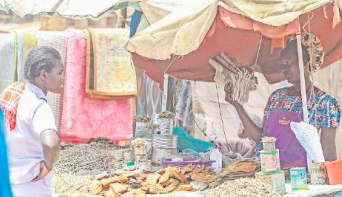
WOMEN in Kenya are outshining
their regional peers in entrepreneurial spirit, with nine out of 10
considering starting or running
their own businesses, a new survey shows.
Compared to the region, 93 per
cent of Kenyan women consider starting or running their own
business, way above the Eastern
Europe, the Middle East, and Africa (EEMEA) average of 51 per
cent.
According to the Mastercard
survey, older generations in Kenya, including Baby Boomers (93
per cent) and Gen X (90 per cent),
are slightly more likely to view
themselves as entrepreneurs compared to the 85 per cent of Gen
Z, and 89 per cent of Millennials.
This trend is in contrast to the
EEMEA region, where younger
women are typically more entrepreneurial.Mastercard executive vice president for services in
Eastern Europe, the Middle East,
and Africa, Selin Bahadirli, says
that the driving forces behind
this wave of entrepreneurship are
financial independence, flexible
working hours, and the pursuit of
personal dreams.
“The entrepreneurial spirit among women is strong and
growing, with younger generations leading the way. With access
to the right financial tools, mentorship, and digital resources,
women entrepreneurs can unlock new business opportunities,
drive innovation, and contribute
significantly to economic development,” said Bahadirli.
Among women founders in
Kenya, 45 per cent started their
business to follow their dream,
while 41per cent sought better work-life flexibility and balance—figures closely aligned with
broader trends across EEMEA.
The survey further shows that
Kenyan women are not only aspiring to start businesses but are
also actively participating in side
hustles, with 76 per cent of women engaged in income-generating
activities outside their main job,
highlighting a strong entrepreneurial drive across all generations.
Agriculture remains the
most popular sector, attracting 35
per cent of women entrepreneurs.
Business services follow closely at
30 per cent, while the food and
drink industry accounts for 22
per cent of women-led enterprises.
Optimism among women entrepreneurs in Kenya is also notably high. Nearly half (49 per cent)
expect their businesses to grow by
over 50 per cent in the next five
years, compared to just 39 per
cent of men.
MastercardSenior Vice President and Country Manager for
East Africa and Indian Ocean
Islands Shehryar Ali, notes that
the lack of funding (53 per cent)
remains the biggest challenge,
followed by lack of financial resources (44 per cent) and the difficulty in securing startup capital
(34 per cent).
Among women who have already started a business, 63 per
cent say finding initial funding
was their biggest challenge.
The most common reason for women
not starting a business, despite
wanting to, is not having enough
money to launch (82 per cent).
Many women also struggle with
building sustainable businesses,
with nearly half (47 per cent) unsure of how to scale, a figure significantly higher than the EEMEA
average of 31 per cent.
Four in 10 (41per cent) also
lack the know-how to develop a
business plan. These figures highlight the need for structured support, mentorship, and training.
In particular, Gen X women ( 61
per cent) expressed a strong need
for entrepreneurial networks, recognizing the value of mentorship
and peer learning.
Additionally, 48
per cent of women believe better
training in business skills would
help, while 26per cent feel that
entrepreneurship should be introduced as a career path at schools
and universities to encourage
more women to enter the space.
Kenyan women entrepreneurs are
embracing AI to drive efficiency,
with 65per cent regularly using
AI tools in their business and 66
per cent reporting significant time
and cost savings.
However, 57 per cent of business owners remain cautious
about expansion due to the rising
risk of fraud, with 58 per cent
having been targeted by a fraudster, underlining the need for robust cybersecurity education and
protection.
49 per cent are more likely than
men (37 per cent) to be uncertain
about how to protect their business from cyberattacks, emphasising the need for education (92 per
cent) to secure their business.