The Trust includes a long-term (retirement) and short-term savings aspects of the Financial Inclusion Fund (Hustler Fund).
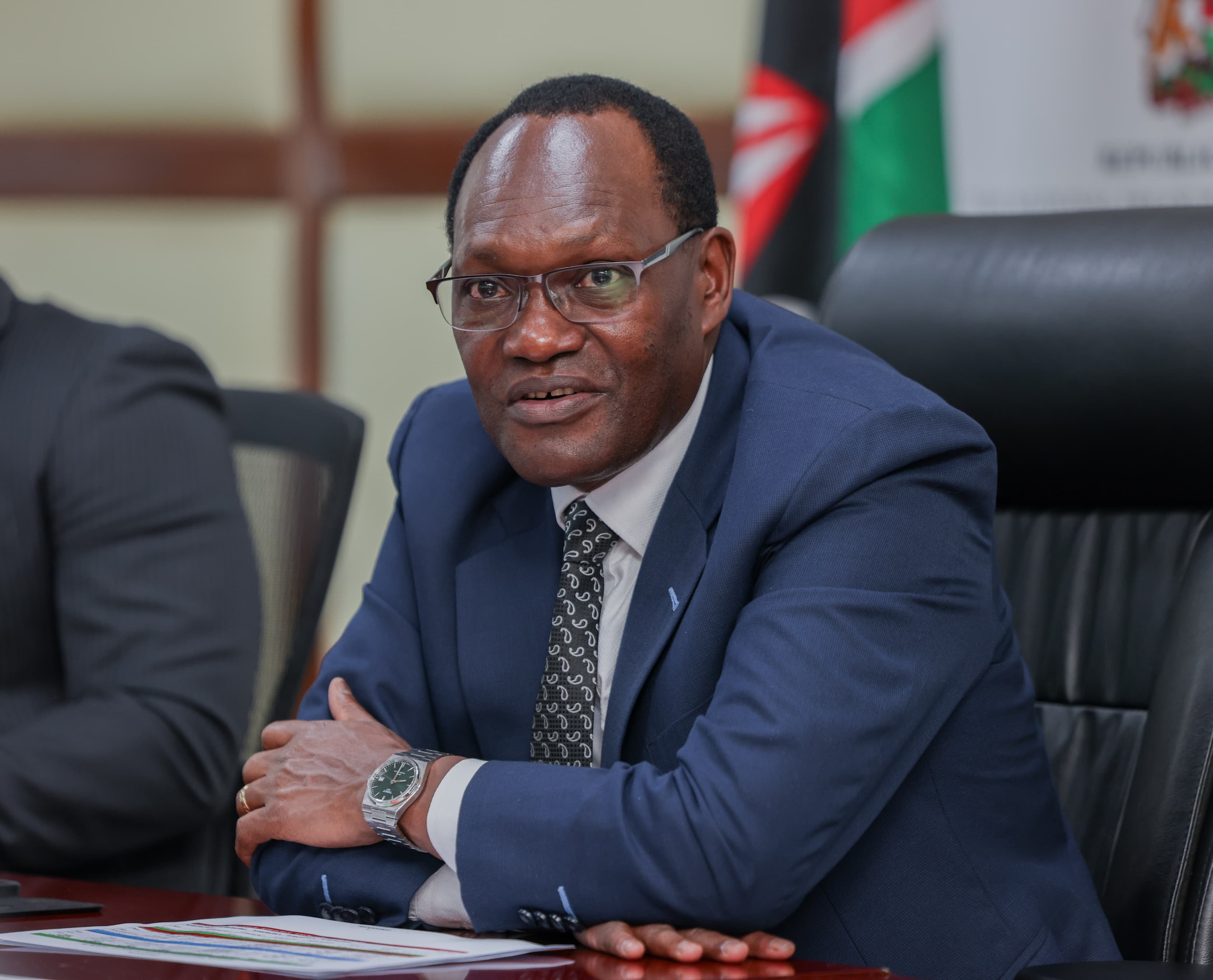
Cooperatives Cabinet Secretary Simon Chelugui said the scheme has a mandatory savings component for the Hustler Fund, and a voluntary savings channel for those who do not wish to borrow.
The savings in both cases are split into long-term (pensions) and short-term savings in the ratio of 70:30. The short-term savings may be accessed at any time to meet the daily income shocks experienced by this sector.
Speaking at the National Treasury after the unveiling of the KNEST board of trustees, Chelugoi said the scheme targets to have at least 10 million members by the end of this year.
“The scheme will be targeting the individuals registered and each saved about Sh10, 000 by end of the year under the voluntary structure,” the CS said, affirming the government’s commitment to match the savings on a ratio of 2:1.
“Hustlers saving on maximum of Sh6, 000 in voluntary scheme will receive an incentive of up to Sh3, 000,” Chelugui explained.
As of yesterday noon, about Sh1.25 billion had gone into savings under the Hustler Fund, with over Sh23 billion disbursed to borrowers, official government data indicates with repeat customers at around 6.5 million.
Total repayment is at Sh13 billion.
National Treasury expressed confidence the KNEST, set up and licensed by the Retirement Benefits Authority (RBA) as an individual pension plan in February 2022, will help improve the pensions environment in the country.
There are about 1,076 pension schemes with over 3.2 million members registered under RBA with aggregate retirement savings of over Sh1.6 trillion.
This represents 13.1 per cent of Kenya’s GDP in 2021.
This is considered to be low as pension coverage in Kenya extends to only around 20 per cent of the labour force, almost exclusively those in formal sector employment.
These workers are covered on a mandatory basis through employer and employee contributions made to the National Social Security Fund (NSSF) and through occupational pensions offered by their employers.
“KNEST is mandated to extend pension coverage to the informal sector which existing institutions could not serve,” Treasury CS Njuguna Ndung’u said.
Most workers in the informal sector (over 16 million Kenyans) who do not have a formal employment contract are not covered by any formal, old age savings mechanism.
“Kenya’s young population is aging and without extending protection to the elderly, there is a risk that poverty in old age will increase,” Treasury notes.
Protection from old age poverty is provided through the Inua Jamii Senior Citizens Grant (a payment of Sh2, 000 per month payable to all Kenyans over age 70), which is only sufficient to cover the most basic of needs and is not sustainable.
To further improve the saving culture, the government is banking on the new NSSF rates where monthly contributions have increased from Sh200 to Sh1, 080 for employer and employee, each bringing this to a new monthly total of Sh2, 160.
Meanwhile, KNEST is projected to raise the savings rate in the country from the current 16 percent to more than 40 per cent in the next five years.
The effect of increased domestic savings is to enable a systematic reduction in the cost of borrowing, Treasury notes.
The Scheme operates as a flexible Pensions Fund under which members have the option of taking their benefits as a phased withdrawal via an income draw down option, purchasing an annuity from an insurance company or opting for a lump sum with trivial pension.
Given the nature of the membership of the Scheme, there is no prescribed retirement age in the Scheme – but there will be some preservation requirement for a number of years for the long-term portion of the savings balance.