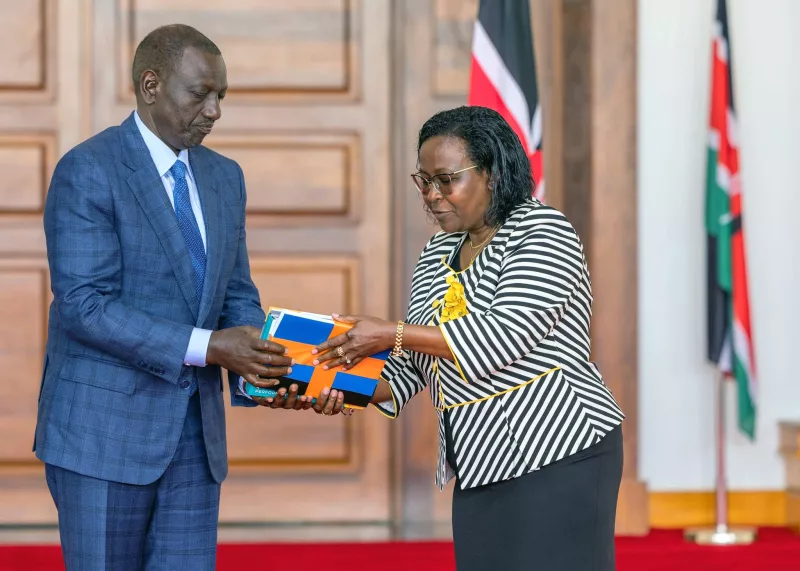
These were the words of President-elect William Ruto during his acceptance speech at Bomas of Kenya on Monday, after IEBC chairperson Wafula Chebukati declared him the winner of this year’s general elections.
While there is still room to contest the elections by his rival Raila Odinga of the Azimio camp, Ruto’s Kenya Kwanza is facing an uphill task if, and when he is sworn into office.
He will be inheriting a near-broke government from his boss Uhuru Kenyatta; riddled with a debt that despite being termed “sustainable”, experts including IMF have indicated the country is “at high risk of debt distress.”
Public debt is currently at Sh8.6 trillion, having nearly doubled from Sh4.4 trillion at the begging of Uhuru’s second term, which Ruto says was hijacked by the opposition.
In June, MPs increased the public debt ceiling to Sh10 trillion as a measure to allow the next government to borrow Sh846 billion.
This is to help bridge the budget deficit in the current financial year, which runs to June 30, 2023.
The then Leader of Majority Amos Kimunya said the country was in a situation where it cannot implement the 2022/23 budget without raising the debt cap.
“I am looking at this debt cap increase as an interim measure,” Kimunya had said.
The total expenditure has been increased from Sh3.2 trillion in financial year 2021/22 to Sh3.34 trillion in the current fiscal year, with projected ordinary revenue of Sh2.14 trillion.
Ruto’s government will also be facing a runaway inflation mainly on rising food prices in the wake of a drought that has left thousands starving.
An attempt to reduce the price of maize flour ( a staple food commodity in almost every Kenyan household) through a subsidy plan was suspended after less than a month.
According to Agriculture CS Peter Munya, the suspension was as a result of inadequate funds from the National Treasury, but widely viewed as a political gimmick that came few weeks to elections.
“Due to inadequate exchequer releases from the National Treasury, it has been decided that the maize flour subsidy program be suspended with immediate effect,” Munya said in a statement.
This has taken the price of a 2-kg maize flour packet to above Sh205, from an intended Sh100.
The country’s currency value has also been depreciating since April this year, a move that has made imports costlier, affected industries’ output and risen commodity prices.
President Uhuru Kenyatta’s administration pegs the high cost of living to global factors, mainly the Russia-Ukraine war, which has disrupted the global supply chain in the past six months.
Last month, Ruto pledged to lower the food price and high cost of living if elected President.
"Let them not give us excuses about Ukraine-Russia, It is laziness, we didn't assist farmers to produce enough food," he said during one of his campaigns.
With a new government coming into place, Financial Risk Analyst Mihr Thakar notes: “The only way out is to raise productivity by increasing access to credit for machinery.”
However, it is a long term process and the short term measures of price caps and subsidies will only hamper a long term transition to efficient management by private sector players, Thakar added.
“Area under production can also be increased by leasing out more land,” he said.
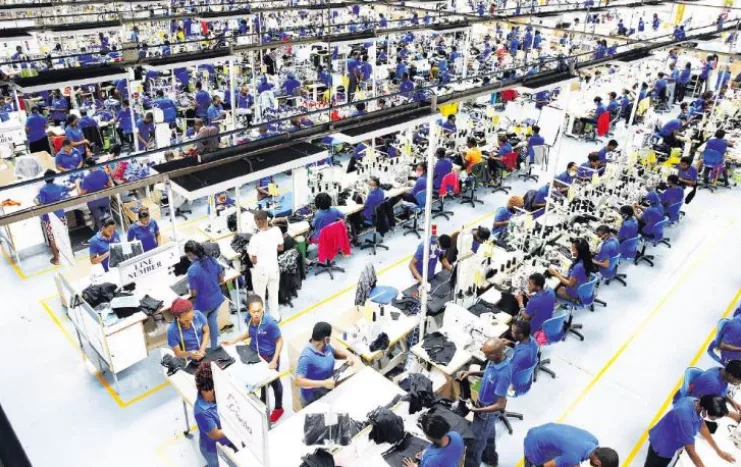
The Kenya Kwanza government is further faced with high unemployment in the country.
More than a third of Kenya’s youth eligible for work have no jobs according to official data.
Census data shows that 5,341,182 or 38.9 per cent of the 13,777,600 young Kenyans were jobless in 2020, with high job losses reported during the Covid-19 pandemic era.
During the launch of its manifesto in Nairobi on June 30, Ruto said the unemployment rate, that is estimated at over 50 per cent, was among the key challenges that will confront his administration.
He also noted the economy is highly dependent on low productive agriculture (around 30 percent of GDP) with high susceptibility to drought, something he is expected to put mitigation measures.
Providing “adequate affordable working capital” to farmers through better governed and revitalized cooperative societies, as promised, remains a wait and see.
Ruto further promised to break away from the “business-as-usual economic policies” and carry out bold reforms to grow the economy.
Promising a “Bottom-Up” module as opposed to a “Trickle-Down” economic model, he noted that the trickle down economics is rigged for the privileged, captured and monopolized by cartels, something he intends to change once he assumes office.
Based on Kenya Kwanza Manifesto, the Institute of Public Finance(IPF) has identified a number of components that it says require keen attention in light of the shrinking fiscal space in Kenya.
This includes capping of expenditure growth at 75 per cent of revenue growth rate, and addressing punitive tax measures, bureaucracies and regulatory frameworks affecting businesses.
Other areas of focus based on Kenya Kwanza manifesto include SMEs, healthcare, housing, ICT and creative economy, infrastructure, women and youth agenda, among others.
Meanwhile, the IMF projects growth at 5.7 per cent in 2022 for Kenya, reflecting a pickup in agriculture and continued recovery in services and other sectors.
WATCH: The biggest news in African Business