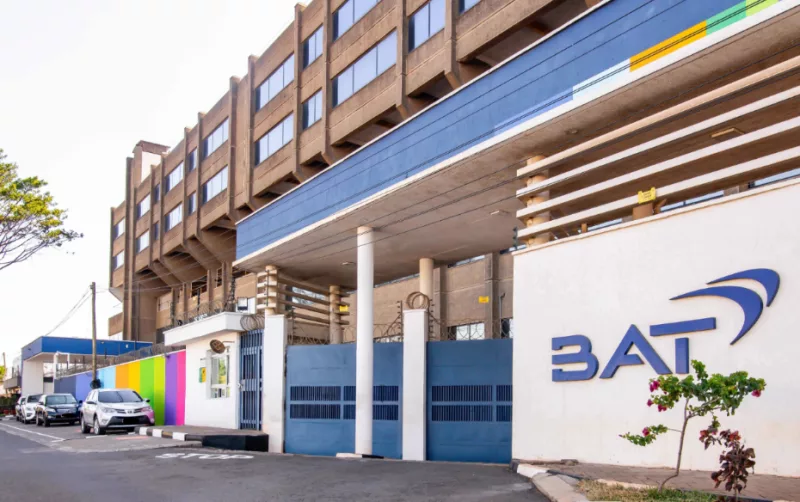
 BAT headquarters in Nairobi/ FILE
British American Tobacco (BAT) Kenya has posted a modest rise in half-year profit after a recovery in export sales offset weaker demand in the domestic market, where rampant illicit cigarette trade continues to erode sales.
The cigarette manufacturer has reported a two per cent increase in profit before tax to Sh4.4 billion for the six months ended June 30, 2026, up from Sh4.3 billion a year earlier.
Net revenue grew five per cent per cent to Sh12.3 billion, driven by higher export sales and growing demand for its modern oral nicotine pouches launched in June last year.
The board also declared an interim dividend of Sh10 per share, maintaining shareholder returns despite rising operating costs and a difficult trading environment.
The results come as BAT Kenya grapples with declining cigarette volumes in the local market amid reduced consumer spending, inflationary pressures and the continued expansion of the illicit tobacco trade.
The company's cost of operations increased by seven per cent to Sh8 billion, reflecting higher raw material costs, compliance expenses related to graphic health warning regulations and investments to support its expanding portfolio of nicotine products.
Despite the increase in costs, operating profit edged up by one per cent to Sh4.3 billion, supported by revenue growth and productivity gains from operational efficiencies.
BAT Kenya managing director Sidney Wafula said the company had demonstrated resilience despite mounting challenges facing the tobacco industry.
"Despite a challenging operating environment marked by the continued rise in illicit cigarette trade, the company delivered resilient performance during this period. These results reflect the agility of our business in navigating an increasingly complex and dynamic environment," he said.
Wafula identified illicit cigarette trade as the biggest threat to the sustainability of the legal tobacco industry, saying illegal products now account for about 45 per cent of the Kenyan market, based on third-party research conducted at the end of 2025.
He said the growth in illicit trade is depriving the government of an estimated Sh12 billion in tax revenue annually, while undermining legitimate manufacturers and their supply chains.
BAT also blamed reduced disposable incomes, worsened by elevated fuel prices linked to the ongoing Middle East conflict, for weaker cigarette sales in the domestic market.
However, the company said exports recovered during the period, while sales of its oral nicotine pouches continued to gain traction, helping offset declining cigarette demand.
The export business also benefited from relative currency stability in key regional markets, although management noted that neighbouring countries continued to experience macroeconomic challenges and adverse weather conditions.
Wafula urged authorities to intensify efforts to combat illicit trade through stronger enforcement and coordinated action.
"Whilst effort has been made by relevant government agencies to address illicit cigarette trade, the continued proliferation highlights the urgent need for decisive, sustained and coordinated action to reverse this trend," he said.
He said BAT remains committed to working with government agencies to create a predictable and compliant operating environment that protects public revenue, legitimate businesses and economic growth.
Beyond conventional cigarettes, BAT said it remains focused on expanding its portfolio of smokeless nicotine products as part of its global transformation strategy.
The company said it will continue investing in science-based innovation and advocating for evidence-based regulation to support tobacco harm reduction.
BAT Kenya remains one of the country's largest manufacturers and exporters.
The Nairobi Securities Exchange-listed firm exports more than 75 per cent of its production from its Nairobi manufacturing facility to eight African markets.
It also operates a green leaf threshing plant in Thika and contracts about 2,200 tobacco farmers in Bungoma, Busia, Migori, Meru and Homa Bay counties.
According to the company, its operations support more than 80,000 direct and indirect jobs across tobacco farming, processing, manufacturing, distribution, transport and retail.
The company has contributed more than Sh100 billion in taxes and other payments to the government over the past six years through excise duty, value-added tax, corporation tax and Pay As You Earn deductions.
As of May 31, 2026, the company had 9,805 shareholders, of whom 9,667 are local investors.