KENYA is moving to unlock the economic potential of its vast northern frontier through two major infrastructure projects that could transform trade, logistics and regional integration under the Lamu Port-South Sudan-Ethiopia Transpor Corridor.
Kenya Ports Authority, working jointly with the Marsabit and Turkana county governments, has commenced plans for the construction of a dry port in Moyale and the introduction of ferry services across Lake Turkana.
economic integration in the region while opening up northern Kenya to trade, investment and tourism opportunities that have long been constrained by inadequate transport infrastructure.
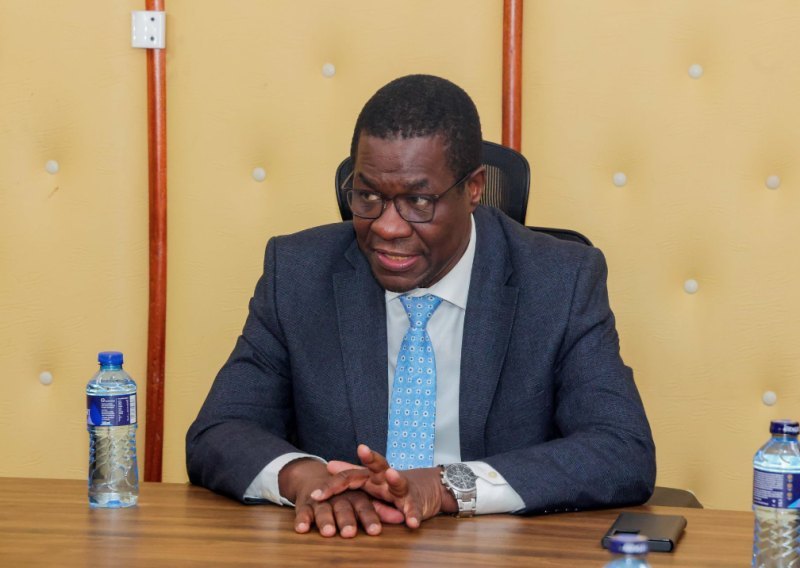
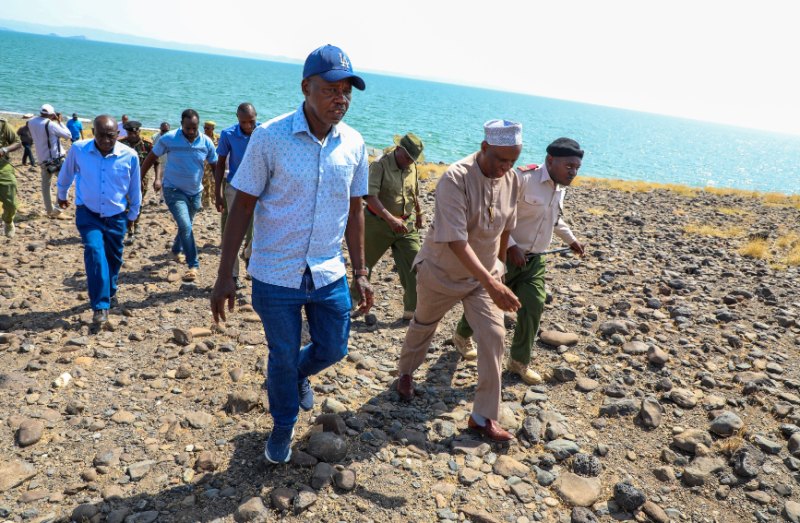
KPA managing director, Captain William Ruto, over the weekend led a high-level delegation to assess proposed sites for the development of the Moyale Dry Port and a modern jetty in Loiyangalani, Marsabit County.
The jetty will support both cargo and passenger ferry services linking Marsabit and Turkana counties across Lake Turkana.
The delegation also toured Kalokol in Turkana county to evaluate potential infrastructure on the opposite side of the lake, laying the groundwork for what officials describe as a transformative transport connection.
Ruto said the projects align with the government's vision of accelerating economic growth through strategic infrastructure investments along the LAPSSET Corridor.
“What we are planning is part of the nation's vision to develop not only urban centres along the LAPSSET Corridor but also broader initiatives aimed at accelerating economic integration across the region,” he said.
The proposed Moyale Dry Port is expected to strengthen cross-border trade between Kenya and Ethiopia by providing a logistics hub for cargo consolidation, customs clearance and freight handling.
Moyale serves as a critical gateway between the two countries and is increasingly becoming an important transit point for goods moving across the Horn of Africa.
Industry analysts say the facility could significantly reduce transport costs and turnaround times for cargo destined for Ethiopia and South Sudan while easing congestion at existing logistics centres.
The planned ferry service on Lake Turkana, meanwhile, is expected to address a longstanding transport challenge for communities living around Kenya's largest desert lake.
Currently, movement of people and goods between Marsabit and Turkana counties often requires lengthy and costly journeys by road through difficult terrain. The ferry service is expected to provide a faster, safer and more affordable alternative.
According to KPA, the project will include the construction of ferry landing ramps, passenger holding areas, shelters and other supporting infrastructure necessary for modern ferry operations.
Marsabit governor Mohamud Mohamed, who accompanied the KPA delegation during the assessment tour, said the project represents a major breakthrough for residents who have for years sought improved connectivity across the lake.
“The proposed ferry connection will significantly improve transport and communication across the lake, facilitate the movement of people and goods, boost trade and investment, enhance access to markets and essential services, promote tourism, and strengthen socio-economic integration between communities living around Lake Turkana,” he said.
The LAPSSET Corridor remains one of Kenya's most ambitious infrastructure programmes, designed to connect the Port of Lamu with South Sudan and Ethiopia through a network of highways, railways, airports, resort cities and logistics hubs.
While significant investments have already been made in the Port of Lamu and key road projects, experts argue that complementary infrastructure such as dry ports and inland water transport systems are necessary to fully realise the corridor's economic potential.
The Moyale Dry Port is expected to play a strategic role in facilitating trade flows from the Port of Lamu into Ethiopia, one of Africa's fastest-growing economies with a population of more than 120 million people.
Similarly, the Lake Turkana ferry service is projected to stimulate local economies by lowering transportation costs and creating new business opportunities in fishing, tourism, agriculture and small-scale trade.
KPA has increasingly positioned itself as a key player in the implementation of Kenya's blue economy agenda and the development of multimodal transport systems linking ports, roads, railways and inland waterways.
The assessment team accompanying Capt. Ruto included general manager for infrastructure development engineer Mathews Amuti, corporate planning and strategy managier Mohamed Golicha and ferry operations manager Paul Koech.