The peace agreement between the United States and Iran to end a conflict that has disrupted global oil supplies since March has been welcomed by governments, businesses and consumers worldwide.
China, UK and global institutions like UNCTAD and the World Bank welcomed the preliminary peace deal and expressed hope that the signing would proceed as scheduled.
China's foreign ministry said : "We hope all parties to stick to the path of peace and solve issues through dialogue.
For Kenya, a country heavily dependent on imported petroleum products, the deal could offer much-needed relief after months of elevated fuel prices that have squeezed household budgets, raised business costs and weighed on economic activity.
The conflict had triggered repeated disruptions and closures of the Strait of Hormuz, the narrow waterway through which about 20 per cent of the world's oil and liquefied natural gas passes.
The closure sent shockwaves through global energy markets, pushing crude oil prices above $100 per (Sh 13,.000) barrel at the height of the crisis and fueling inflation across many economies.
Globally, financial markets reacted positively to news of the peace framework, with oil prices falling sharply amid expectations that shipping through the Strait of Hormuz will normalize in the coming weeks.
In their immediate three months outlook on Monday, analysts at Citi now expect Brent crude prices to average lower in the second half of the year as the agreement restores confidence in global energy supplies.
For Kenya, where fuel costs influence virtually every sector of the economy, the implications could be significant.
The latest review by the Energy and Petroleum Regulatory Authority (EPRA) shows just how much pressure the energy market has faced.
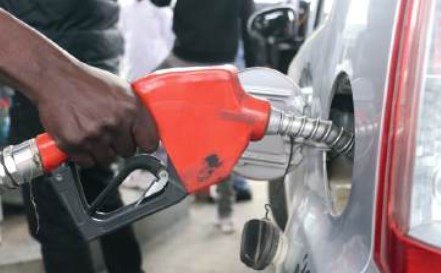
Although motorists received modest relief this month, with petrol prices reduced by Sh0.22 per litre and diesel by Sh10 per litre, pump prices remain historically high.
In Nairobi, petrol now retails at Sh214.03 per litre while diesel costs Sh222.86 per litre.
The reductions came after a sharp increase in May when EPRA raised petrol prices by Sh16.65 per litre and diesel by Sh46.29 per litre, reflecting the impact of higher global oil prices and shipping costs linked to the Middle East conflict.
Higher fuel prices have had far-reaching consequences for Kenyan households.
Transport fares rose across many routes, food distribution costs increased and manufacturers faced higher production expenses.
Since diesel powers much of Kenya's transport, agriculture and industrial sectors, its elevated cost fed directly into the prices of essential goods and services.
Businesses have also felt the strain. Manufacturers, logistics companies, airlines and agricultural producers have all reported rising operating costs, forcing many firms to either absorb losses or pass costs on to consumers.
The economic pressure has been reflected in business confidence indicator.
Kenya's Purchasing Managers' Index (PMI) fell in May as firms reported weaker demand, slower growth in new orders and reduced hiring activity.
Many businesses cited rising costs and caution among consumers as key challenges.
Private sector surveys also showed that chief executives became increasingly concerned about operating costs and future demand, leading many firms to delay expansion plans and recruitment.
The slowdown comes at a delicate time for Kenya's economy.
While inflation has remained relatively contained compared with previous years, elevated fuel and transport costs have continued to pose risks to price stability.
The Central Bank of Kenya has repeatedly warned that imported inflation, particularly through energy prices, remains one of the biggest threats to the country's economic outlook.
Last week, CBK's Monetary Policy Committee (MPC) cut economic growth by 40 basis points to 4.9 per cent from an earlier projection of 5.3 per cent.
This saw the MPC retain the base lending rate at 8.75 per cent as a way of slowing the rising cost of living.
Lower oil prices resulting from the US-Iran deal could therefore provide several benefits simultaneously.
James Mwai , an economist at Prime Capital is confident that Kenya's a economic growth will pick up from where it was before the war.
He says that most of the country's economy revolves around oil."Everything is bound to ease once that is sorted. Let's wait for the final signing of the agreement later this week," Mwai told the Star.
His optism is shared by a CFO of one of one of Kenya's biggest banks. He is confident that the deal will help inflationary pressure in the country.
Inflation rose to 6.7 per cent in May from 5.6 per cent the previous month.
They argue that households would enjoy lower transport and energy costs, businesses would face reduced production expenses, and inflationary pressures would ease.
In turn, stronger consumer spending and improved business confidence could support economic growth.
The benefits extend beyond Kenya.
The global economy has also been grappling with the fallout from the conflict.
According to the OECD, disruptions in the Middle East have constrained energy supplies, slowed trade and weakened global growth prospects.
The organization noted that continuing disruptions in the Strait of Hormuz have been a major drag on economic activity worldwide.
A sustained peace agreement could help reverse some of those effects.
It is of the view that lower energy costs would reduce inflation pressures in major economies, improve supply chain efficiency and support investment and consumer spending.
"Markets have already interpreted the agreement as a positive signal for growth, with investors betting that lower oil prices will support economic recovery across both advanced and emerging economies."
For Kenya, the immediate impact may not be felt overnight because fuel pricing also depends on exchange rates, taxes and shipping costs.
Nevertheless, Tom Olale, an expert in global fuel supply says that if crude prices continue to fall and the Strait of Hormuz remains open, consumers and businesses could gradually begin to experience meaningful relief.
He cannot project the expected slowdown in fuel prices. "I can predict when but I have no clue at how much prices will call. They are bound to fall, anyway."