Women entrepreneurs are receiving a small share of business credit despite playing a growing role in Kenya's economy, as persistent financing barriers that continue to limit the expansion of female-led enterprises.
Data by Metropol Credit Reference Bureau (CRB) shows that women-owned businesses account for just 27 per cent of outstanding micro, small and medium enterprise (MSME) credit value, compared to 73 per cent for male-owned firms.
The figures indicate that for every Sh1,000 advanced to male-owned businesses, women-led enterprises receive only about Sh361, a significant gender gap in access to business financing.
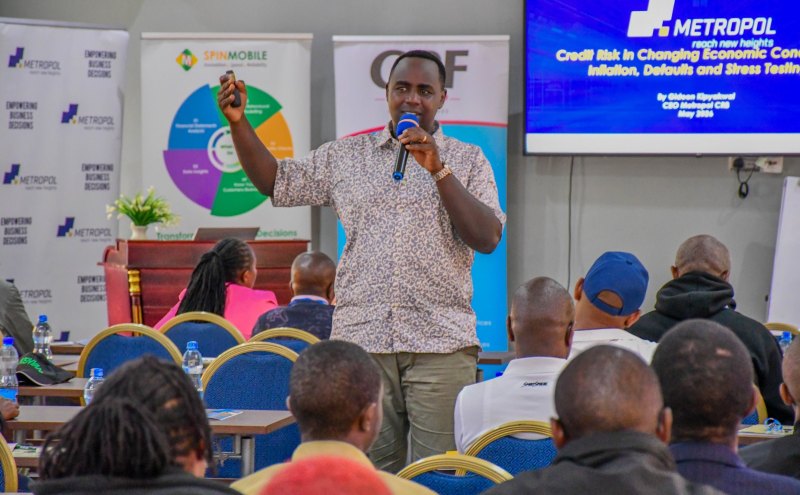
Metropol CRB Chief Executive Officer Gideon Kipyakwai said the disparity is not a reflection of the performance or potential of women entrepreneurs but rather a consequence of lending models that remain heavily dependent on traditional collateral requirements.
“Across Kenya, women are running successful businesses and creating jobs. The challenge is that many do not have access to the traditional forms of collateral that lenders often require,” said Kipyakwai.
He noted that many women-owned enterprises operate profitable businesses but struggle to access credit because ownership of land, buildings and other assets commonly accepted as security remains uneven.
The credit bureau is now pushing for wider adoption of customer-centric lending scorecards that assess borrowers using a broader range of data, including repayment history, credit records and business performance, rather than relying primarily on collateral.
“Customer-centric lending scorecards can help lenders build a more complete view of a customer's creditworthiness by incorporating credit history, repayment behaviour and other relevant customer information alongside traditional assessment methods,” Mr Kipyakwai said.
He added that expanding the criteria used to evaluate borrowers could unlock financing for thousands of creditworthy entrepreneurs who are currently overlooked by conventional lending models.
The findings come at a time when policymakers and financial institutions are seeking ways to improve access to finance for MSMEs, a sector widely regarded as a key source of employment and economic growth.
Participants at the workshop, which brought together SACCOs, fintechs, digital lenders and regulators from Central, Lower Eastern and Upper Eastern Kenya, observed that many women-owned and informal businesses remain underserved despite demonstrating strong growth potential.
They argued that heavy reliance on collateral-based lending continues to exclude many entrepreneurs from formal credit markets even when they have strong repayment records and viable businesses.
Kipyakwai said credit bureaus have evolved beyond their traditional role of flagging loan defaulters and are increasingly helping lenders make more informed decisions by providing a fuller picture of customer creditworthiness.
“At Metropol, we see our role as enabling better lending decisions by helping lenders use comprehensive credit information to identify opportunities, manage risk and expand access to finance,” he said.
The two-day workshop, themed Bridging the Gap: Use of Customer-Centric Lending Scorecards, held in Embu County forms part of broader efforts by industry stakeholders to promote data-driven lending practices aimed at widening access to credit while maintaining prudent risk management standards.