This is amid growing concern that rising personnel costs are not translating
into improved public services.
The commission on Tuesday announced a three-day National Productivity and
Performance Conference scheduled for June 17 to June 19 in Nairobi.
The event will bring together top government officials, public sector
agencies, private sector players, civil society, academia and development
partners to discuss how to improve efficiency and fiscal sustainability in the
civil service.
President William Ruto is expected to chair the conference, which will also
be attended by Deputy President Kithure Kindiki, Chief Justice Martha Koome,
National Assembly Speaker Moses Wetang’ula and Senate Speaker Amason Kingi.
Outstanding institutions are also expected to receive performance awards
during the event.
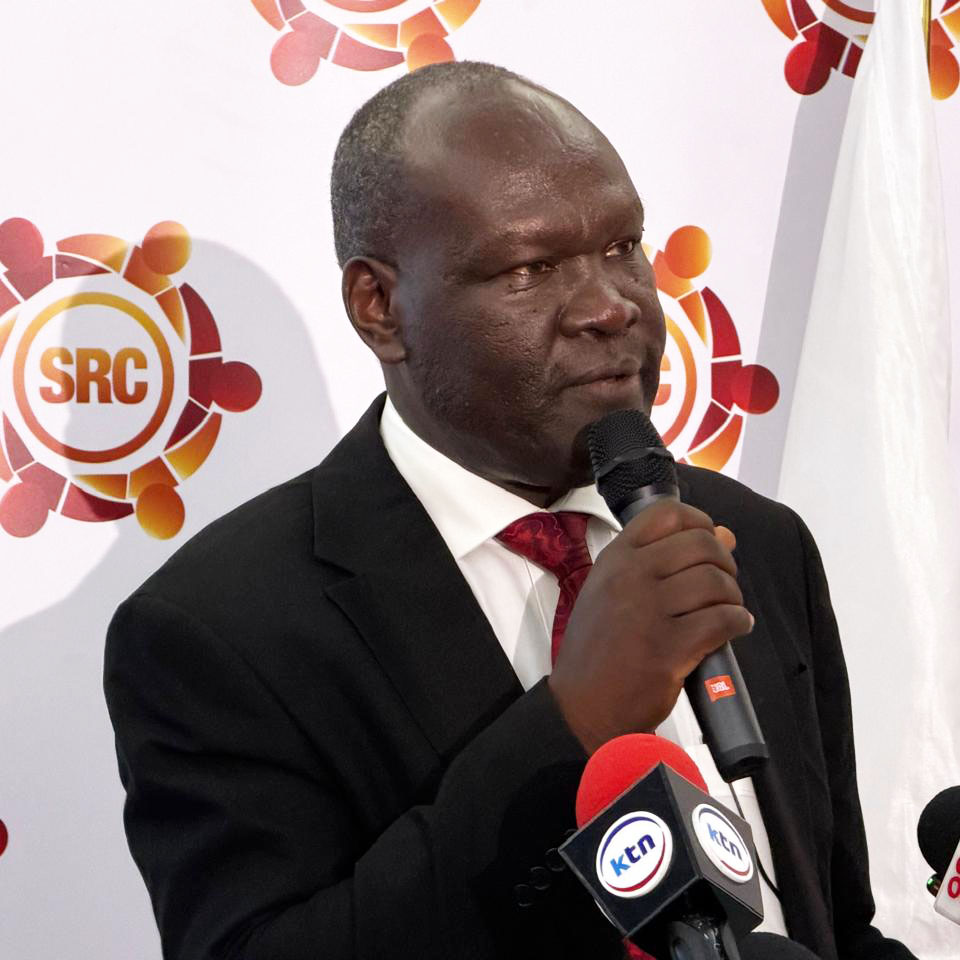
SRC chairperson Sammy Chepkwony said Kenya has spent more than a decade
trying to tame the public wage bill through legal caps and fiscal controls, but
with limited success.
“It is over 10 years since the Public Finance Management Act was put in
place, yet the 35 per cent cap is yet to be achieved,” Chepkwony told
journalists in Nairobi.
The PFM Act, 2012, sets expenditure on salaries and wages to a maximum of 35 per cent of total revenue.
However, most entities continue to exceed the threshold.
Only four counties - Elgeyo Marakwet, Nyandarua, Trans Nzoia and Nyeri- are
currently complying with the wage bill ceiling, according to SRC data presented
during the briefing.
Kenya’s wage-bill-to-revenue ratio currently stands at 41 per cent, above the statutory threshold, although SRC says this marks an improvement from 55 per cent recorded in 2020.
As of June 2025, the public wage bill was projected to hit nearly Sh1.3 trillion, raising concerns over sustainability amid mounting debt obligations and shrinking revenues.
SRC now argues the country’s biggest problem is not necessarily the size
of salaries, but whether taxpayers are getting value from the money spent on
public workers.
“The question is, should we be rewarding employees for activities or the outcomes?” Chepkwony posed. “Public service productivity has stagnated compared with the private sector,” he added.
The commission says it now wants public servants assessed more on measurable
results and service delivery outcomes rather than simply meeting activity-based
targets contained in traditional performance indicators.
Chepkwony argued that Kenya has “a productivity challenge rather than a wage
bill problem,” saying the country’s public sector output remains low compared
with regional and global peers.
Data shared during the briefing painted a grim picture of the country's labour
productivity standing globally.
In figures attributed to the International Labour Organisation (ILO),
Kenya ranked 142nd out of 182 countries globally in labour productivity in
2025, an improvement from position 155 out of 189 countries in 2023.
Within Africa, Kenya ranked 21st out of 52 countries, up from position 27
out of 53 in 2023.
The rankings place Kenya behind African economies such as Gabon, Mauritius,
Libya, Algeria, Egypt, Djibouti, Eswatini, Botswana, South Africa and Tunisia.
Globally, Luxembourg topped the productivity rankings, followed by Ireland,
Norway, Guyana, Denmark and Singapore.
SRC also presented comparative productivity data showing Kenya’s labour
productivity stood at about USD 7,750 per worker annually in 2025,
significantly lower than competing economies.
Singapore posted productivity levels of USD 117,500 per worker, while the
United States stood at USD 121,500. Japan recorded USD 92,000, Germany USD
89,600, Malaysia USD 30,600, and China USD 20,100.
Even within Africa, Kenya lagged behind peers such as Ghana at USD 12,600
and South Africa at USD 17,500.
SRC officials argued that unless Kenya improves public sector efficiency and
output, salary increments alone would continue exerting pressure on the
exchequer without corresponding gains in economic growth or quality service
delivery.
“The solution is to promote productivity in the public sector,” Chepkwony
said, noting that the process had already started through a circular issued by
Head of Public Service Felix Koskei directing agencies to focus more on productivity
measurements.
Intergovernmental Relations Technical Committee chairperson Kithinji Kiragu said a productivity-focused public service would ultimately improve incomes and economic performance. “When we focus on productivity, even incomes will grow, as the economy will do better,” Kiragu said.
Public Service Commission chairman Francis Meja said Kenya must rethink how it evaluates performance in government. “The conference is timely. It has been realised that the wage bill is not the problem but productivity,” Meja said.
County Assemblies Forum representative Jackline Waithaka said the success of the conference would ultimately be judged by whether it delivers real change in public service delivery.