Kenya risks
undermining its corruption war in the health sector if
professionals who uncover malpractice are targeted, the
Institute of Certified Public Accountants of Kenya (ICPAK) warns.
ICPAK questioned the treatment of Andrew Kipkirui Rotich, a senior auditor who was allegedly dropped
from the Social Health Authority (SHA) for exposing irregular medical invoicing at the defunct National Health Insurance Fund (NHIF).
Rotich, who has
been an ICPAK member since 2012, was part of a forensic audit team that flagged
suspicious billings that cost taxpayers millions.
However, following a
court-ordered review of SHA’s recruitment, he and two other deputy directors
were excluded from the latest shortlist a move ICPAK says risks discouraging
professionals from speaking out against fraud in Kenya’s health system.
“Public interest
professionals who act ethically must be protected from vulnerability. If such
reprisals are left unaddressed, they will send a dangerous message that
integrity is punished rather than rewarded,” said ICPAK chair Elizabeth
Kalunda.
The accounting
body is now pressing for urgent passage of the long-stalled Whistleblower
Protection Act, arguing that without legal safeguards, auditors and other
professionals will shy away from exposing malpractice in public institutions.
The warning comes
at a sensitive time for Kenya’s health sector, which has been plagued by graft
scandals ranging from fraudulent claims to inflated procurement contracts.
The body also
called for whistleblowers to be granted security guarantees called on the accountability
institutions — including Parliament, Treasury, Auditor General and the Ethics
and Anti-Corruption Commission (EACC) — to act decisively on audit findings.
“The work of
auditors and accountants is essential in safeguarding public resources and
maintaining trust in institutions. Any attempt to silence them undermines
Kenya’s governance framework and erodes public confidence in reforms such as
the Social Health Authority,” ICPAK said.
Kenya has seen
repeated pledges to clean up the health sector, but whistleblowers often
complain of harassment, dismissal or prolonged legal battles after exposing
graft.
With billions of
shillings flowing into healthcare annually, ICPAK warned that unless
protections are enforced, corruption risks will deepen, leaving both taxpayers
and patients to bear the cost.
ICPAK added that
professional ethics, continuous education, and rigorous oversight are vital to
restoring confidence in institutions, particularly as Kenya battles corruption
scandals that continue to erode public trust.
“Financial
integrity is not just about numbers it is about protecting citizens, ensuring
investor confidence, and fostering national growth,” said Kalunda.
ICPAK held that the
profession is uniquely placed to detect irregularities in procedures, laws, and
policies, making it a critical pillar in safeguarding taxpayer resources.
“Accountants and
auditors are at the frontline of governance. Their work is essential in
identifying breaches, bolstering oversight, and maintaining trust in
institutions,” said ICPAK chair Prof. Elizabeth Kalunda.

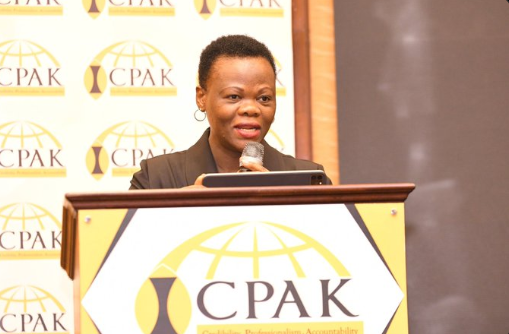
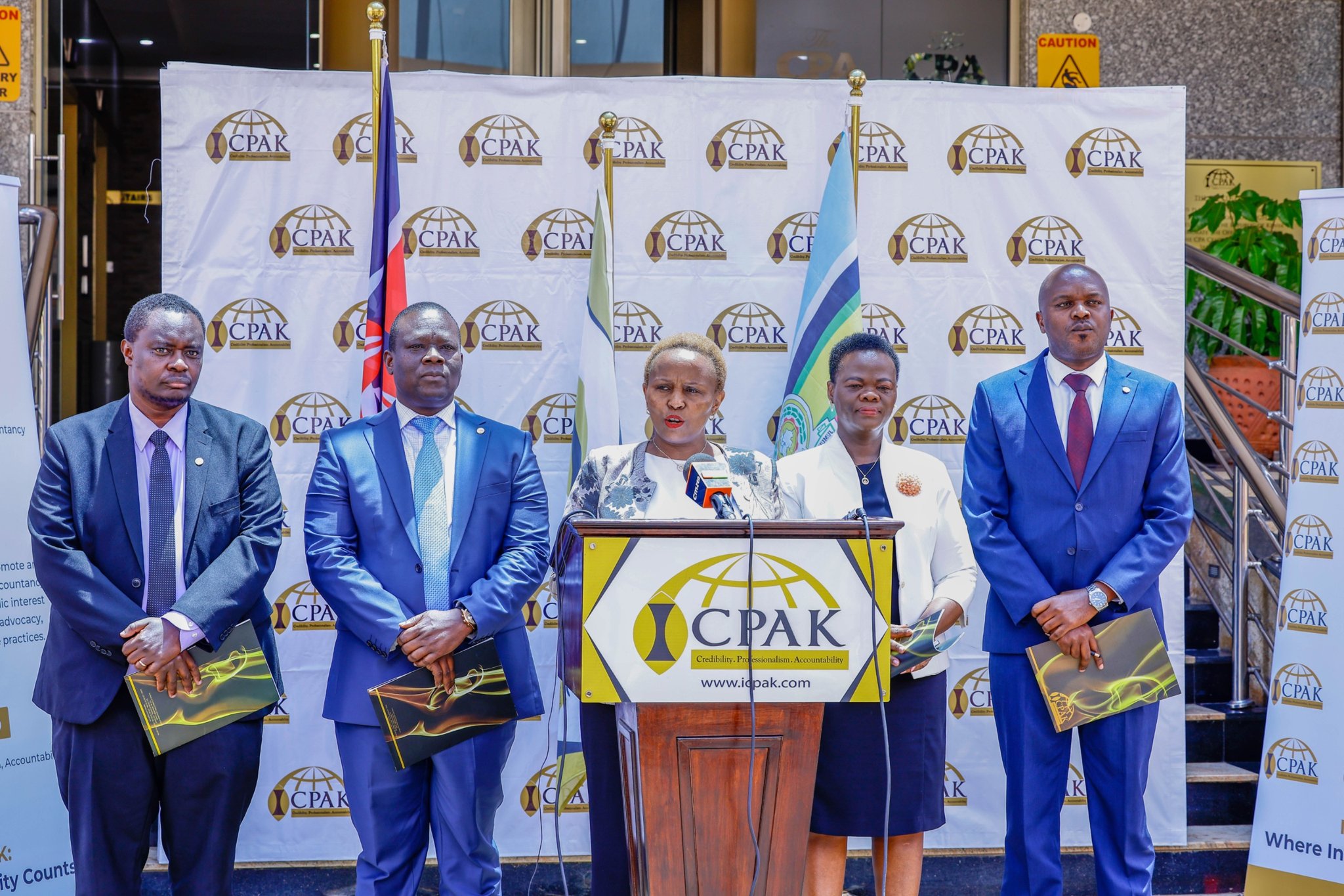
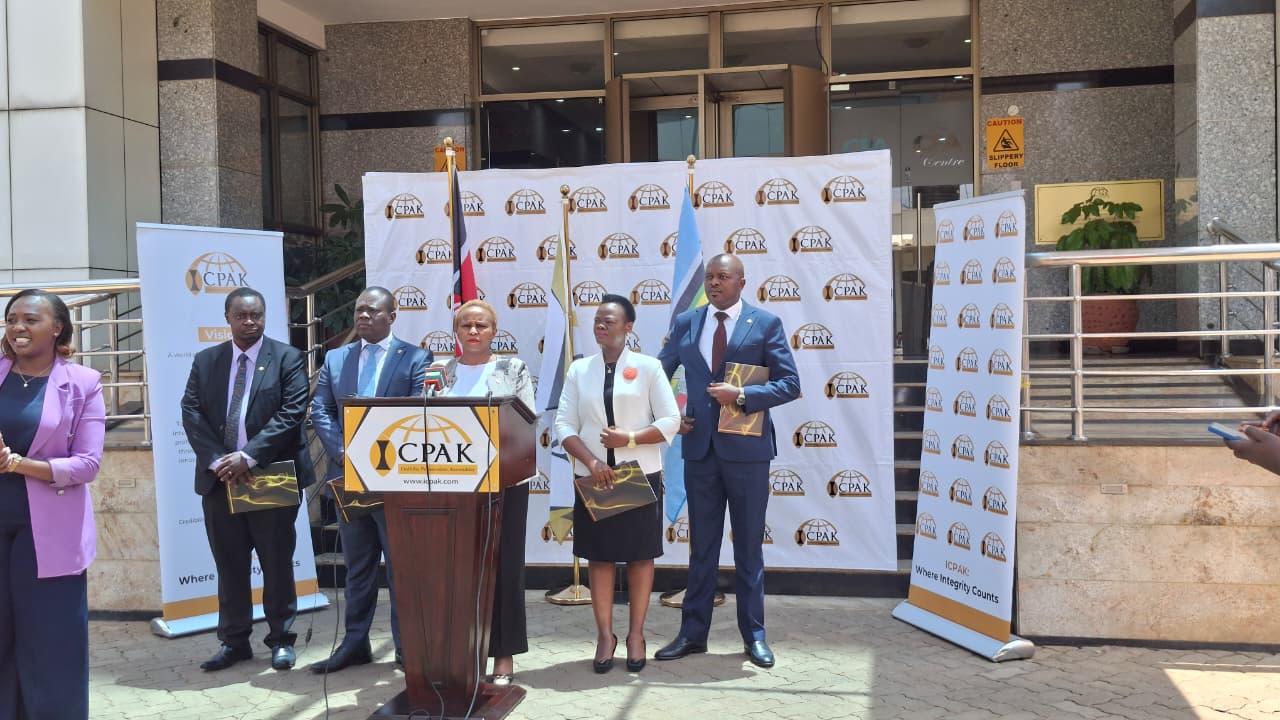 ICPAK council members Chrispus Mbogo, Benard Amukah, chairman
Elizabeth Kalunda, CEO and secretary to the council Grace Kamau and
Wycliff Bichang’a (member) during a presser on October 1 /HANDOUT
ICPAK council members Chrispus Mbogo, Benard Amukah, chairman
Elizabeth Kalunda, CEO and secretary to the council Grace Kamau and
Wycliff Bichang’a (member) during a presser on October 1 /HANDOUT


![[PHOTOS] The new Ngong –Naivasha Road viaduct](https://cdn.radioafrica.digital/image/2026/06/64d4f771-4432-4aee-ba3c-2f304c4436ec.jpg)