As East African countries ramp up efforts to keep Ebola
at bay, health advocates are urging wealthy nations to shoulder a greater share
of the financial burden, warning that frontline countries should not be left alone to
confront the global threat.
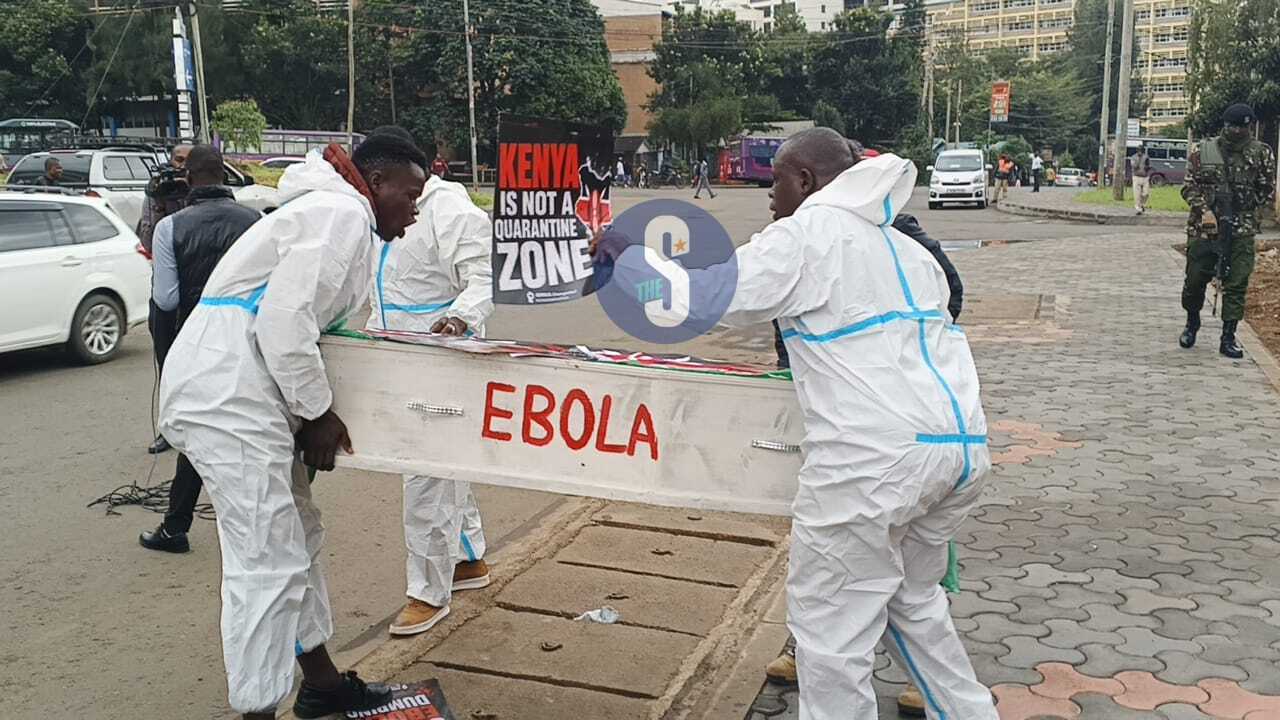
The call comes as Kenya continues to spend millions of
shillings on border surveillance and screening of travellers arriving by air,
road and sea to prevent the spread of Ebola from neighbouring countries.
Although Kenya has not reported any Ebola cases, the
Ministry of Health says the country remains at moderate risk because of its
extensive travel and trade links with affected countries.
The government has invested millions of shillings in
preparedness measures and screened thousands of travellers at airports,
seaports and land border crossings. Isolation facilities have been placed on
standby, while laboratories at the Kenya Medical Research Institute (KEMRI) in
Nairobi and Kisumu have been prepared for rapid testing.
The AIDS Healthcare Foundation (AHF) says Kenya and
other East African countries should not be left to carry the responsibility of
protecting the rest of the world.
AHF Kenya Country Director Samuel Kinyanjui said the
latest outbreak has once again exposed weaknesses in the global health system,
particularly in financing emergency responses in lower-income countries.
"When Ebola crosses from Ituri Province into
Kampala, it does not stop to check whether Kenya has a preparedness plan on
paper or a functioning one in practice. We are 800km from the
epicentre and one bus ride from an imported case," he said.
"Every outbreak follows the same script: the virus
moves fast, the international response moves slowly, and the communities
closest to the danger are the last to receive the tools they need. Kenya cannot
afford another cycle of delayed action and fragmented cooperation. Preparedness
must be built on equity and sustained investment — not on the assumption that
the next outbreak will be someone else's problem."
The current outbreak, caused by the Bundibugyo strain of
the Ebola virus, has spread across parts of the Democratic Republic of the
Congo (DRC) and into Uganda.
The World Health Organisation (WHO) declared the
outbreak a Public Health Emergency of International Concern on May 16, citing
the risk of cross-border transmission and the absence of an approved vaccine or
treatment for the strain.
As of May 29, the outbreak had
resulted in 906 suspected cases and 223 suspected deaths in the DRC. Across the
two countries, 134 confirmed cases had been recorded, including nine in Uganda,
while 18 deaths had been reported among confirmed cases.
More recent reports indicate that the DRC has recorded
hundreds of confirmed cases, while Uganda continues to detect imported
infections linked to the outbreak.
AHF noted that African countries have repeatedly
demonstrated their ability to detect outbreaks early, trace contacts and
mobilise communities, often despite severe resource constraints.
The organisation argued that financing such efforts
should not fall primarily on countries closest to the outbreak.
It pointed to recent discussions at the World Health
Assembly, where countries failed to finalise parts of the proposed Pathogen
Access and Benefit Sharing (PABS) Annex under the WHO Pandemic Agreement.
The disagreement centred on how benefits, technology and
resources should be shared during global health emergencies.
According to AHF, the delay has stalled progress on a
broader framework intended to strengthen global preparedness for future
pandemics.
"In Nairobi, we are screening tens of thousands of
travellers at our borders while Geneva remains gridlocked over who should pay
for the next pandemic. The global health architecture does not need another
round of cosmetic adjustments; it needs to be rebuilt from the ground up, with
decision-making power and resources transferred to the regional bodies that
actually detect and contain these outbreaks," Dr Kinyanjui said.
"The affected countries in the Eastern African
region have activated isolation centres, readied laboratories, and mobilised
community health workers, all before the international community could agree on
a single paragraph of the Pandemic Agreement."
The Bundibugyo strain has raised particular concern
among health experts because there is currently no licensed vaccine or specific
treatment available.
Previous outbreaks linked to the strain have recorded
fatality rates ranging between 25 and 50 per cent.
Health authorities in the DRC, Uganda and neighbouring
countries are relying heavily on testing, contact tracing, patient isolation
and public awareness campaigns to slow transmission.
WHO and its partners continue to support surveillance,
laboratory testing and cross-border preparedness efforts.
AHF said the outbreak should serve as a stark reminder
that global health security depends on equitable access to funding, technology
and medical tools.
The organisation noted that frontline countries are
often expected to detect, report and contain dangerous diseases rapidly, even
as negotiations over financing and fair access to vaccines, treatments and
diagnostics drag on.
As East African countries strengthen their defences
against Ebola, AHF argues that protecting populations in the region also
safeguards communities far beyond Africa's borders.
"The outbreak serves as a real-world reminder that global health
security cannot function without trust, cooperation, and enforceable
commitments that apply to all countries equally," the organisation said.
Instant analysis
The renewed calls for wealthy nations to fund Ebola preparedness in East
Africa highlight a longstanding imbalance in global health security. Countries
such as Kenya, Uganda and the DRC often serve as the first line of defence
against infectious disease outbreaks, yet they frequently shoulder the greatest
financial burden. The debate goes beyond Ebola and touches on broader questions
of fairness, global solidarity and equitable access to health resources. As
cross-border diseases can quickly become international crises, investment in
preparedness in frontline countries is increasingly being viewed not as aid,
but as a shared responsibility that protects populations worldwide.