

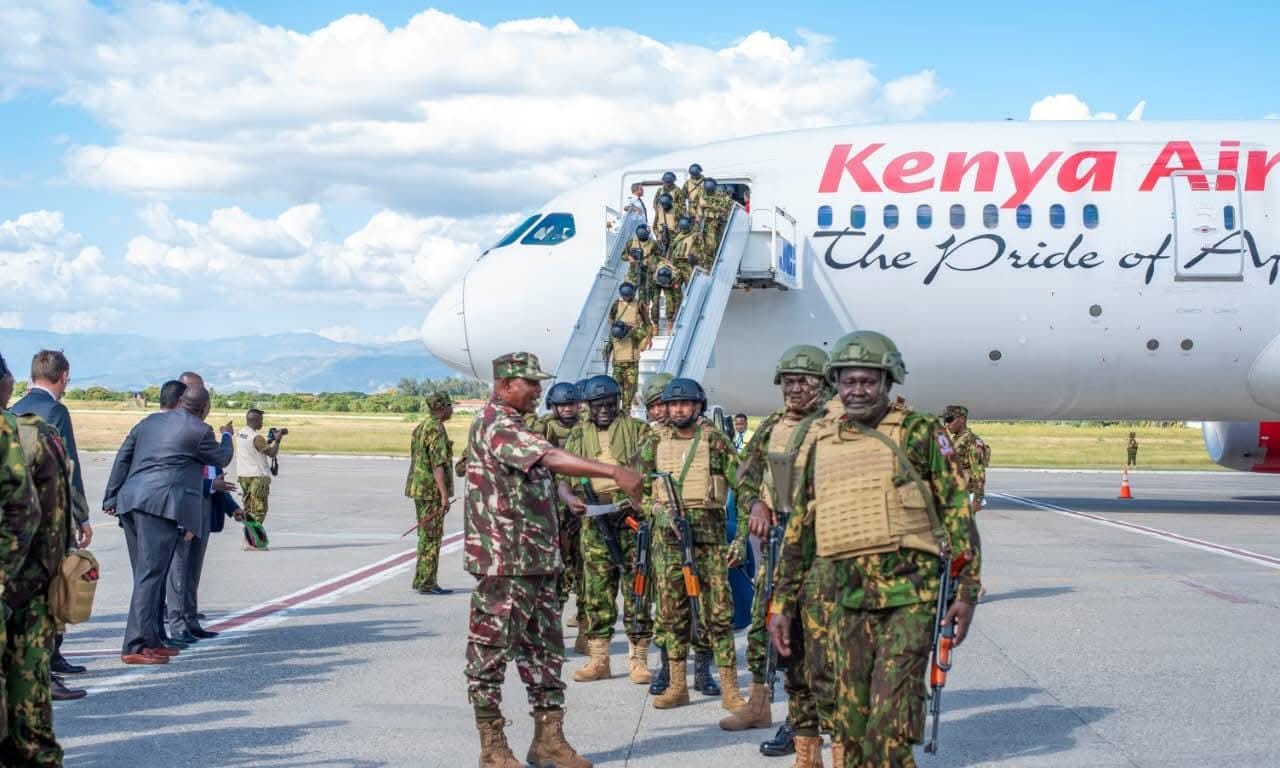
The United States will today co-host the Haiti Force Generation conference for the Gang Suppression Force (GSF), marking a major diplomatic push to rally global support for Haiti’s urgent security needs.
Today’s conference to be held at the UN Canada mission in New York seeks to mobilise resources, personnel, equipment, and logistical support for the GSF, the international force authorised to help Haitian authorities reclaim territory from heavily armed criminal networks.
Speaking ahead of the conference, US Chargé d’Affaires to Haiti Henry Wooster emphasised that stabilising Haiti remains one of Washington’s top foreign policy priorities, especially amid escalating gang violence that has crippled institutions, displaced families, and deepened the country’s humanitarian crisis.
Wooster noted that the US is working closely with regional and international partners in convening the Standing Group of Partners, an alliance committed to strengthening Haiti’s security deployment and coordinated response.
“The United States looks forward to co-hosting the Haiti Force Generation Conference for the Gang Suppression Force,” Wooster said.
“Rallying the international community, especially regional partners, in support of Haiti remains a top priority. We must work together to combat criminal gangs terrorising Haitians and destroying the country.”
The meeting is expected to bring together senior diplomats, defense officials, and security agencies from across the Americas, Europe, and beyond.
The US has been among the most vocal supporters of a coordinated global response to Haiti’s multidimensional crisis, which has worsened over the past two years.
More than 80 percent of Port-au-Prince is now believed to be influenced or controlled by gangs, according to recent security assessments.
The Force Generation conference aims not only to strengthen operational capacity for the GSF but also to ensure sustainable international backing as Haiti prepares for a long, complex stabilisation effort.
Officials say today’s meeting will focus on troop commitments, equipment pledges, intelligence cooperation, and enhanced regional coordination.
Wooster reiterated that lasting peace in Haiti will require consistent and united action.
“This is not the time for the world to look away,” he said. “It is the time to stand with the Haitian people,” he said.
The conference outcomes are expected to be announced later today, with additional pledges anticipated from several nations participating under the Standing Group of Partners framework.
Today's meeting is aimed at getting a sense of the countries willing to provide personnel.
So far, the only nation publicly expressing interest in sending soldiers to Haiti is Rwanda, and consultations are reportedly continuing ahead of a potential deployment.
Unresolved questions surrounding the core design and operations of the GSF continue to discourage wider international participation.
The US, which declined to deploy personnel during the Multinational Security Support (MSS) mission, has shown no sign of revising its stance.
Security analysts note that Washington’s position may be further dampening the willingness of other nations to join the mission.
A December 2 report by Devex, which reviewed a draft of the force’s Concept of Operations (CONOPS), revealed that several prospective contributors are uneasy with what they described as aggressive operational language and significant legal uncertainties.
This concern persists even as the Us continues carrying out disputed lethal strikes on suspected drug-smuggling vessels in the Caribbean.
The Humanitarian additionally reported that Panama’s President José Raúl Mulino, speaking shortly after the UN Security Council approved the GSF, said his country was ready to help by training Haitian police officers but would not deploy troops.
He argued that sending soldiers would be tantamount to “sending them to die,” given the risks involved.
Mulino expressed concern about the dire security and governance situation in Haiti.
“Haiti, unfortunately, is currently a failed country. There is no law there to guarantee anything,” he is reported saying.
Panama, he said, is willing to cooperate with the international community by offering training to Haitian police officers within Panamanian territory.
“I have proposed, and I told the Secretary General of the United Nations, that Panama will cooperate on the issue of Haiti, providing training to its police forces in Panama. They can come to Panama…but we are not going to send soldiers to Haiti to die,” Mulino stated.
An early US draft of the CONOPS outlines that the proposed 5,500-member force would focus primarily on locating, capturing, and potentially eliminating gang elements.
The summary obtained by Devex grants the mission broad authority to use force, stating that its core duties include conducting offensive operations aimed at neutralising gang leaders and disrupting their financial and logistical lifelines.