

Kenya continues to fall short in effectively regulating
political financing and ensuring compliance with international anti-corruption
standards, a new report has warned.
The Kenya Civil Society Parallel Report on the United
Nations Convention Against Corruption (UNCAC) warns that an unregulated
campaign finance environment is allowing illicit funds, opaque political
donations and criminal networks to shape the country’s politics.
The report was released by Transparency International Kenya
and partner organisations on Tuesday .
It found that in the 2022 election cycle, cash circulating
outside formal banking systems reached an all-time high of Sh252 billion,
fuelled by unbridled election spending.
This is despite the establishment of a legal framework on
political financing through the Political Parties Act and the Election Campaign
Financing Act, which provide for public funding, disclosure requirements and
regulation of campaign expenditures.
The study particularly notes that the suspension of the
Election Campaign Financing Act and the lack of political will to regulate
campaign spending have created a huge corruption gap in Kenya’s governance
system.
“Implementation remains weak,” the report says.
“The Election Campaign Financing Act has never been fully
operationalised due to lack of political will, enforcement by agencies like the
Office of the Registrar of Political Parties (ORPP) is limited, and public
access to political finance information is poor.”
Consequently, Kenya was found to have not fully realised the
objectives of the UN Convention Against Corruption.
Article 7.3 of UNCAC provides that each member state shall
enact laws to enhance transparency in the funding of candidatures for elected
public office and political parties.
The report comes on the backdrop of unconfirmed claims by
the United Opposition that state resources were unlawfully used to secure UDA
victories in Mberee North and Malava, and upward of Sh600 million spent in a
constituency.
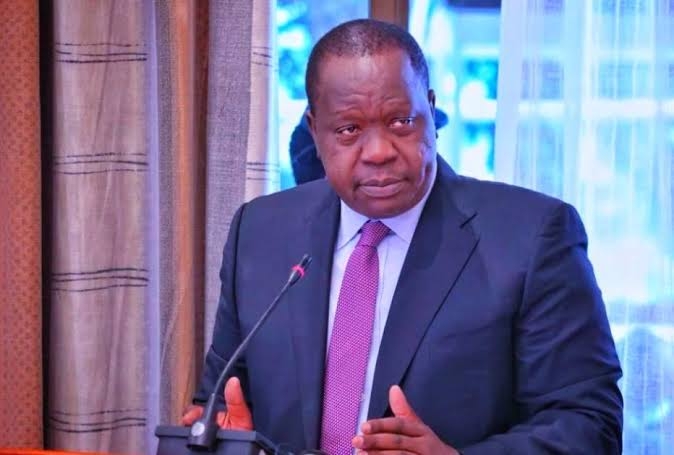
Jubilee presidential aspirant Fred Matiang’i said state
machinery, choppers and cash were used to secure the wins.
Nyamira Senator Okong’o Omogeni added that the state used at
least six choppers to campaign in Nyasiogo ward.
“When we did the tabulation, the amounts used in the ward
would be enough to pay SHA contributions for all the residents of Nyasiogo,” he
said.
“But that money was given to residents so that they could
win the seat.”
Former Agriculture CS Mithika Linturi also claimed Sh600
million was used to win the MP seat, whereas in normal circumstances, Sh10
million would have been enough.
The Campaign Financing Act provides that a candidate,
political party or referendum committee shall not receive any contribution or
donation in cash or in kind from the state, a state institution or agency or
any other public resource.
The IEBC is also required to prescribe the spending limits
for candidates and political parties at least 12 months before an election
through a gazette notice.
However, the report notes that with no spending limits, no
disclosure rules and no caps on donations, political campaigns have become the
primary gateway through which corruption is financed, entrenched and protected.
Further, the report says the political class has
deliberately preserved this legal vacuum, allowing candidates to draw funds
from shadowy business networks, state contractors, foreign interests and
criminal groups without scrutiny.
Failure to effectively regulate political funding is
attributed to “political interference, lack of political will, limited
transparency in party finances in practice and weak oversight mechanisms”.
“In particular, the amendments proposed to the Election
Campaign Financing Act to prevent money laundering, illicit financial flows and
corruption have not been adopted due to a lack of political goodwill,” the
report says.
“Meanwhile, electoral campaigns lack accountability
mechanisms to hold the candidates or political parties accountable for the
source of the funds and their expenditure.”
It further found that although the political parties are
required to prepare annual accounts and submit them to the Registrar of
Political Parties and the Auditor-General, compliance remains minimal.
The campaign financing gaps have drawn interest from various
sectors, including the diplomatic corps.
In a previous interview with the Star, German Ambassador
Sebastian Groth expressed concern over the matter, noting that transparency
helps explain not just the campaign but also post-election expectations and
influence.
“In Germany, our system is more transparent. Parties are
compensated based on their election performance, and any donation above a
certain amount — maybe €10,000 — must be publicly declared,” he said.
The envoy said Kenya's legal framework needs improvement in
this regard.
“Germany has had its own scandals, too, but we’ve learned
from them,” he said.
“Where we are now is a relatively high level of monitoring
and accountability, and that’s something Kenya could also benefit from.”
The main gap that the report highlights is the repeatedly
suspended Election Campaign Financing Act, which was designed to regulate
political spending and improve transparency. Parliament has consistently
deferred its implementation.
Kenya now heads into the 2027 General Election under
conditions that enable unlimited political spending, anonymous donations, voter
bribery and cash-driven mobilisation.
Other electoral abuse risks include the perpetual state
resource misuse by the incumbents and financing from cartels and foreign
interests.
While illicit money flows freely into campaigns, the report
warns that the institutions responsible for fighting corruption are being
weakened from within by political interference.
The EACC, ODPP, DCI, Asset Recovery Agency and the
Judiciary’s Anti-Corruption Courts all have strong mandates on paper. But in
practice, their independence is undermined by political actors who manipulate
appointments, pressure investigators and influence prosecution decisions.