


A civil society group has launched collection of signatures in its quest to amend the constitution to remove tax on basic commodities.
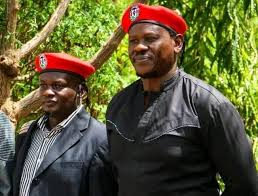
The Free Kenya Movement (FKM), led by activist Bob Njagi, has notified police in Nairobi that the group will be holding a signature collection drive on Wednesday, December 10, 2025, from 8 am.
“We pursue a popular initiative on the removal of taxes on basic and essential commodities as a way to bring down the cost of living as well as start off the discussion on restructuring the State and System of Governance,” the notice dated December 5, 2025, states.
The notice signed by National Coordinator Free Kenya Movement Felix Wambua was served at the Nairobi Regional Police Commander and also copied to Central, Kamkunji and KICC police station commanders.
The group says it seeks to amend Article 43 of the Constitution by introducing a list of foods to be exempt from tax as a way of addressing the cost of living.
The targeted Article on social and economic rights grants every person the right to be free from hunger, and have adequate food of acceptable quality, clean and safe water, health care and sanitation, among others.
FKM is asking Kenyans to list the 15 essential goods that they think should be tax-exempt, arguing that this will not only bring the cost of living down, but cost of production down, thus spurring economic growth and job creation through expansion of industries.
The group also wants the National Government Constituency Development Fund (NGCDF) abolished and replaced by Area Specific Devolved Development Funds (ASDEDEF), which will be increased from 2.5 per cent to cover villages, village clusters, sub-wards, wards and constituencies.
The group further wants the current revenue allocation to counties to be done through the Council of Governors to share among themselves equitably with the guidance of the Commission on Revenue Allocation (CRA).
To ensure the independence of constitutional commissions, the activists want the creation of the Commission of Commissions, which shall receive a block allocation from the budget and share among the independent offices and commissions under the direction of CRA.
The group is also yearning for reforms that will see the gender parity addressed in electoral areas by abolishing the current constituencies and instead turning counties into constituencies that will be represented by an equal number of male and female MPs.
For instance, the group says a big county like Nairobi should have 14 MPs; seven male and seven female, while small counties like Lamu, Isiolo and Tharaka Nithi have one male and one female legislator, while each of the seven continents shall be represented by two MPs.
On public participation, the group wants the public views to be taken into consideration before any policy and legislation is enacted, unlike in the current situation where MPs ignore the public input and pass laws while disregarding the concerns raised during public forums.
The proposal states that should more than 70 per cent reject the policy or proposed bill, the matter is dropped altogether, while should a 50 to 70 per cent raise issues, they shall be accommodated in the final document, which shall be returned to the public for ratification.