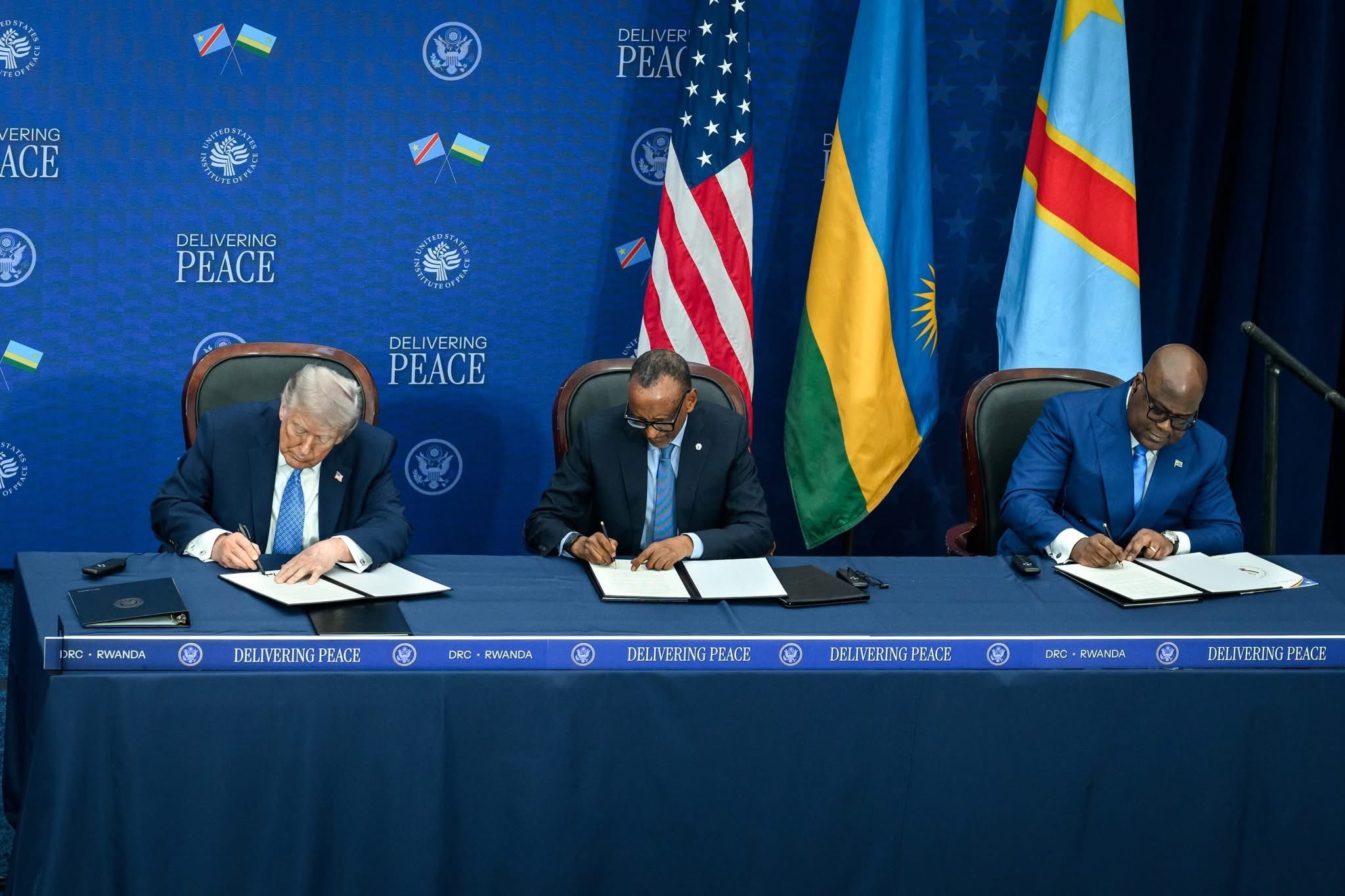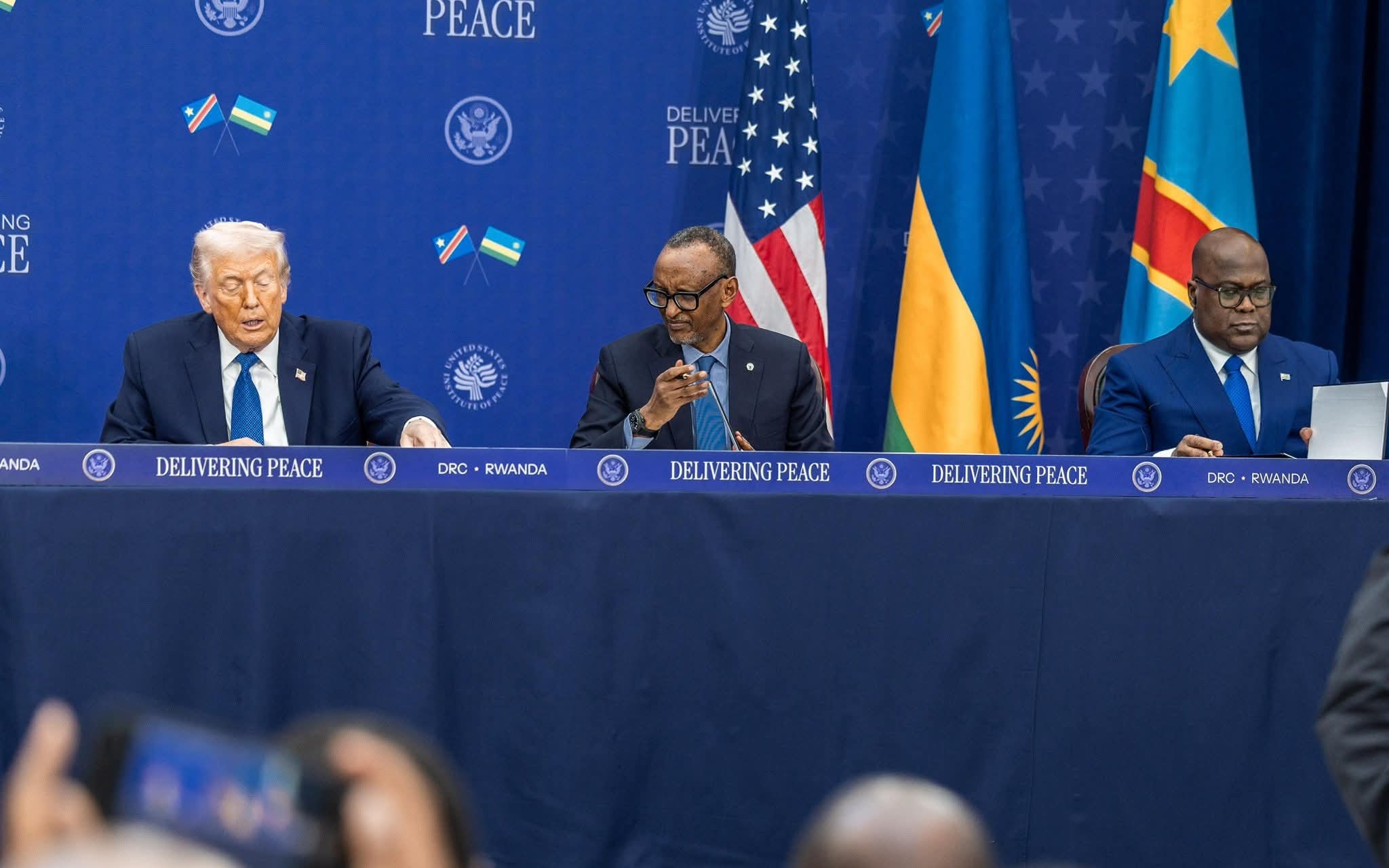


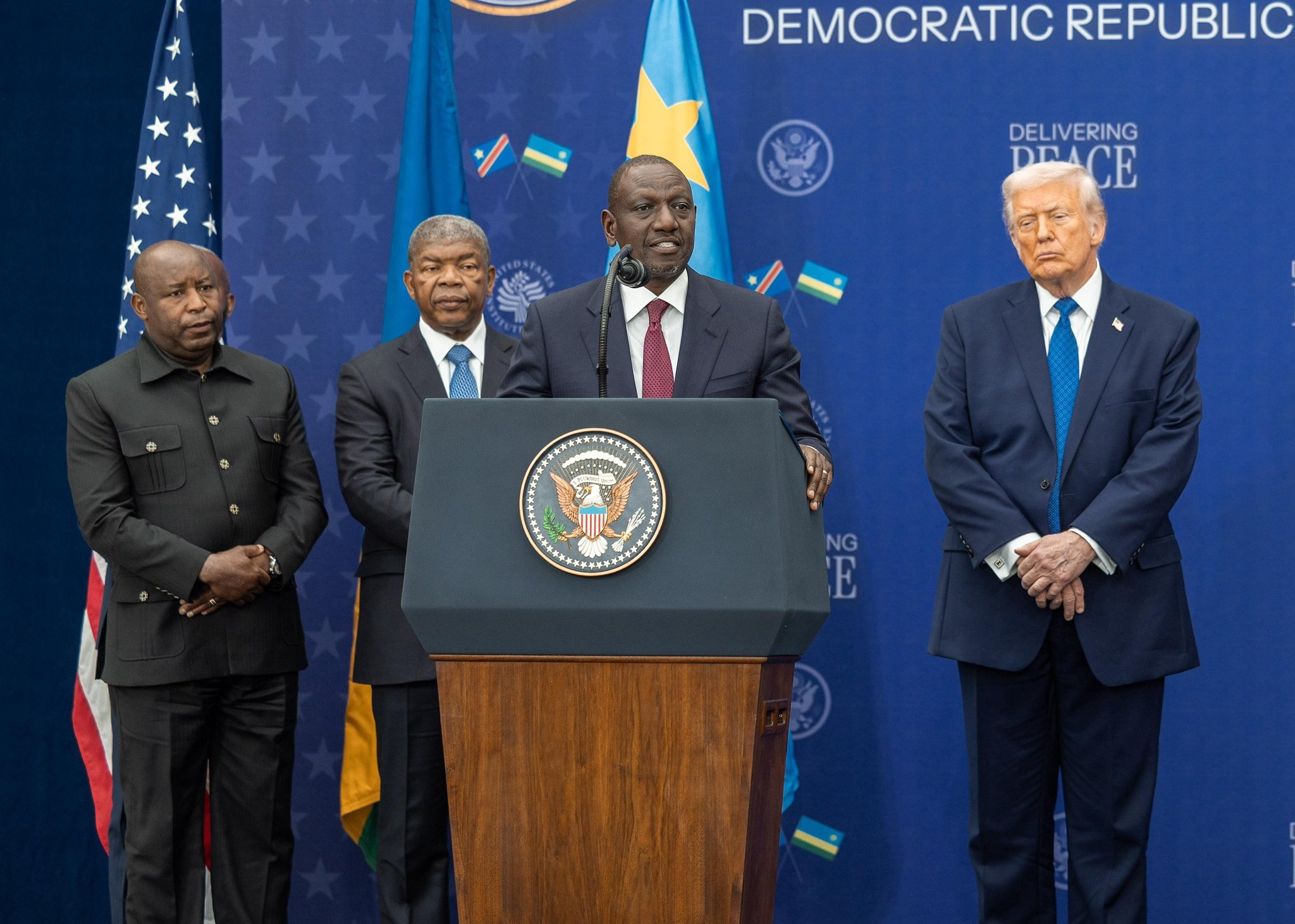
Rwanda and the DRC on Thursday signed a peace accord in
Washington, a deal brokered not by African bodies but by the US.
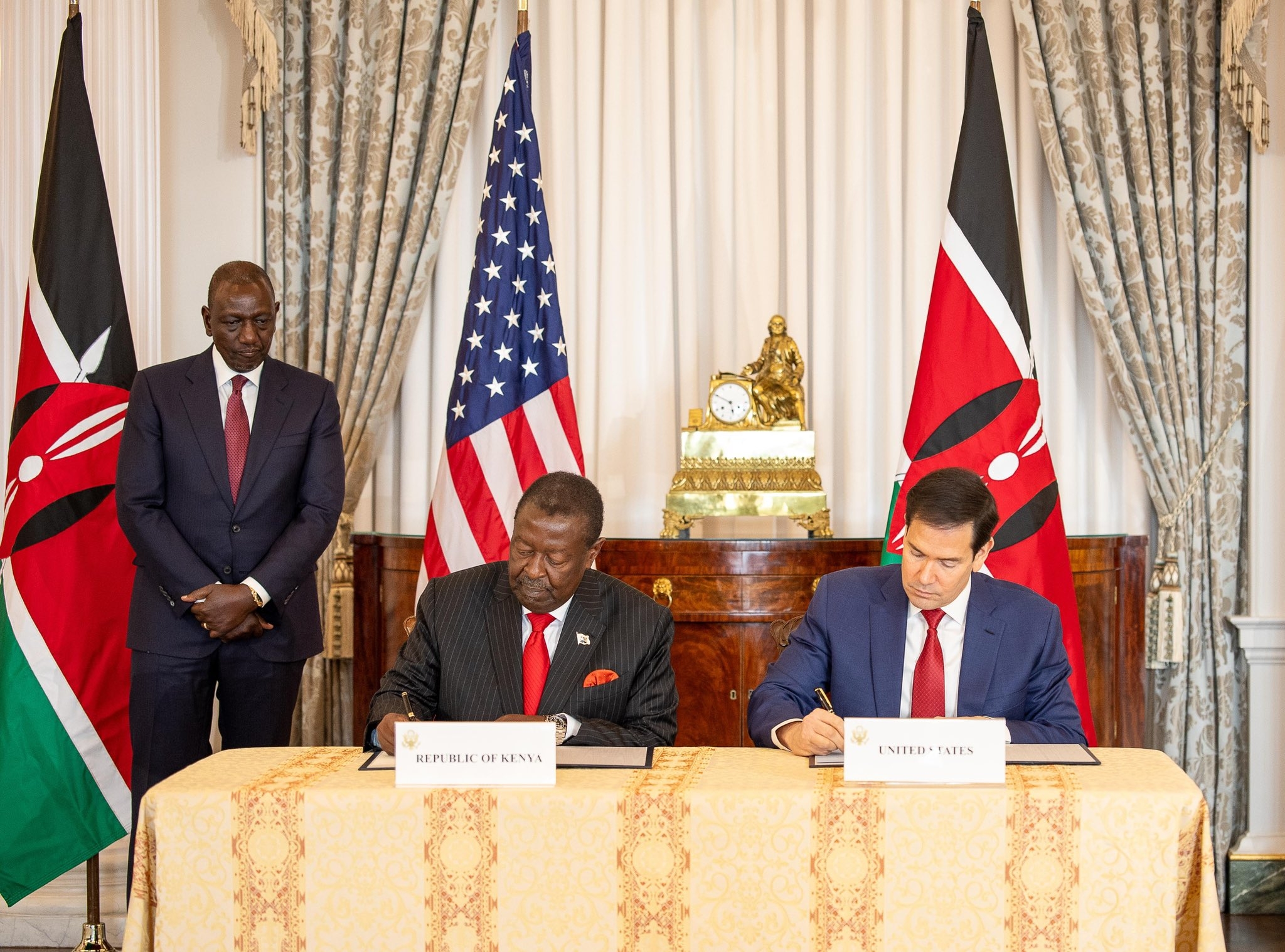
President William Ruto and his Burundi counterpart Évariste
Ndayishimiye were invited as guarantors of the deal.
While the accord has been hailed as a milestone for
stability in eastern DRC, many observers see it as a striking irony, and one
that won’t solve the long-standing conflict.
Leaders who have long championed “African solutions to
African problems”, such as Rwanda’s Paul Kagame and Kenya’s Ruto, were paraded
in Washington, having outsourced one of the region’s most intractable conflicts
to foreign powers.
The accord formalises commitments outlined in the June 2025
Washington Accord, including Rwandan troop withdrawals, joint security
coordination and measures to curb support for rebel groups.
Economic collaboration is also on the agenda, covering
trade, critical minerals and infrastructure development.
Despite earlier agreements on cessation of hostilities,
violence continues on the ground.
Just as the leaders were heading to Washington, the United
Nations reported heavy clashes early Tuesday on multiple fronts in South Kivu.
This triggered counter-accusations of breaching the
cessation, with spokesperson for the DRC Armed Forces (Fardc) Sylvain Ekenge
condemning M23 for a “series of assaults on military positions in South Kivu”.
The UN has accused Rwanda of backing the M23, an accusation Kigali denies.
The M23 rebels, in return, accused Fardc of "launching
widespread attacks on densely populated areas as well as across all
frontlines" in South Kivu.
M23 spokesperson Lawrence Kanyuka alleged that Fardc forces
struck the densely populated town of Kamanyola, a strategic crossroads now held
by the rebels, killing at least three civilians and injuring five others.
Amnesty International Eastern African expressed little
confidence in the signing, saying violence continues in eastern DRC.
“Months of discussions and the signing of multiple
agreements have had no tangible impact on the lives of Congolese civilians,”
Amnesty International regional director for East and Southern Africa Tigere
Chagutah said on Thursday.
“President Trump must press M23, Rwandan and Congolese
leaders to end ongoing human rights abuses against civilians in the country and
clearly indicate that they will be held individually accountable for their
failure to respect the agreement.”
Equally contentious is the sidelining of regional African
mechanisms.
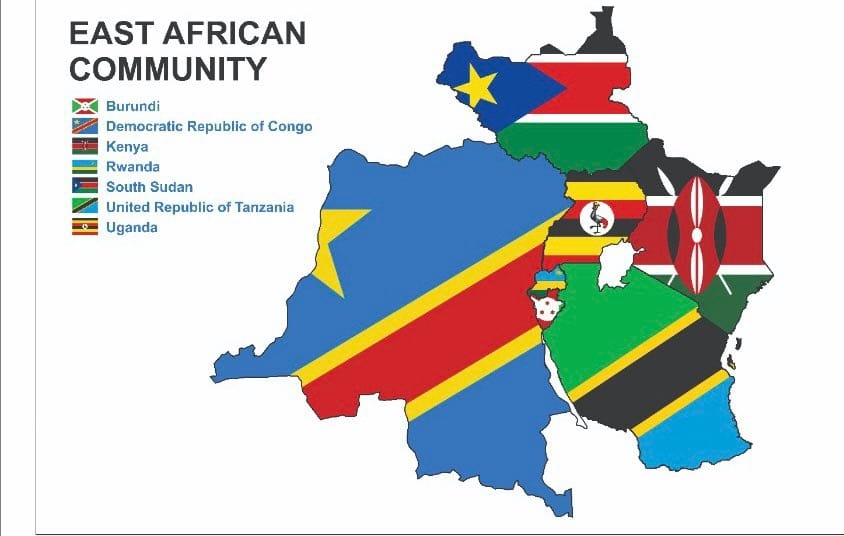
The EAC and Sadc, and the AU-led Luanda process, which have
long mediated DRC-Rwanda tensions, were largely bypassed.
Critics see this as a betrayal of the principle of African
solutions for African challenges, highlighting a reliance on foreign powers
even as African leaders publicly decry outside interference in regional
affairs.
“The optics are stark. Here we have Kagame and Ruto, who
have been champions of African-led solutions and interestingly AU reforms,
taking a conflict negotiated by Africans to the United States for
finalisation,” a former top diplomat said.
“It raises serious questions about whose interests this deal
truly serves.”
A mediator who was involved in the regional mechanism termed
US and Qatar involvement a “hostile takeover”, adding that the DRC and Rwanda
are also to blame for disregarding local solutions to foreign interventions.
Foreign policy analyst and journalist Mwangi Maina added
that African diplomacy is once again walking a tightrope in Washington.
“For years, President Kagame has preached the virtue of
‘African solutions to African problems’, a mantra designed to assert
continental agency. Yet here he is, alongside his fiercest regional rival,
seeking a truce on American soil,” he said.
“Pragmatism, however, has its own logic. China’s Deng
Xiaoping liked to remind sceptics, it matters little whether the cat is black
or white, so long as it catches mice. Peace is the only mouse that counts in
the Great Lakes.”
Observers have also argued that the agreement is just but an
avenue for the Trump administration to access DRC minerals.
Eastern DRC is resource-rich, with cobalt, lithium and gold
attracting global attention.
Analysts suggest that access to minerals may be a stronger
motivator for US involvement than genuine peacebuilding, raising concerns that
the deal could prioritise strategic extraction over local stability.
The DRC was expected to also sign a minerals and
infrastructure partnership with the Trump administration as part of a series of
deals aimed at ending the conflict.
The US and Qatar interventions are structured into two
formations. One is the Washington Accords is a Rwanda-DRC framework on peace,
security and economic cooperation.
On the other hand, the Doha Process facilitates direct talks
between the DRC and AFC-M23 for a lasting peace.