

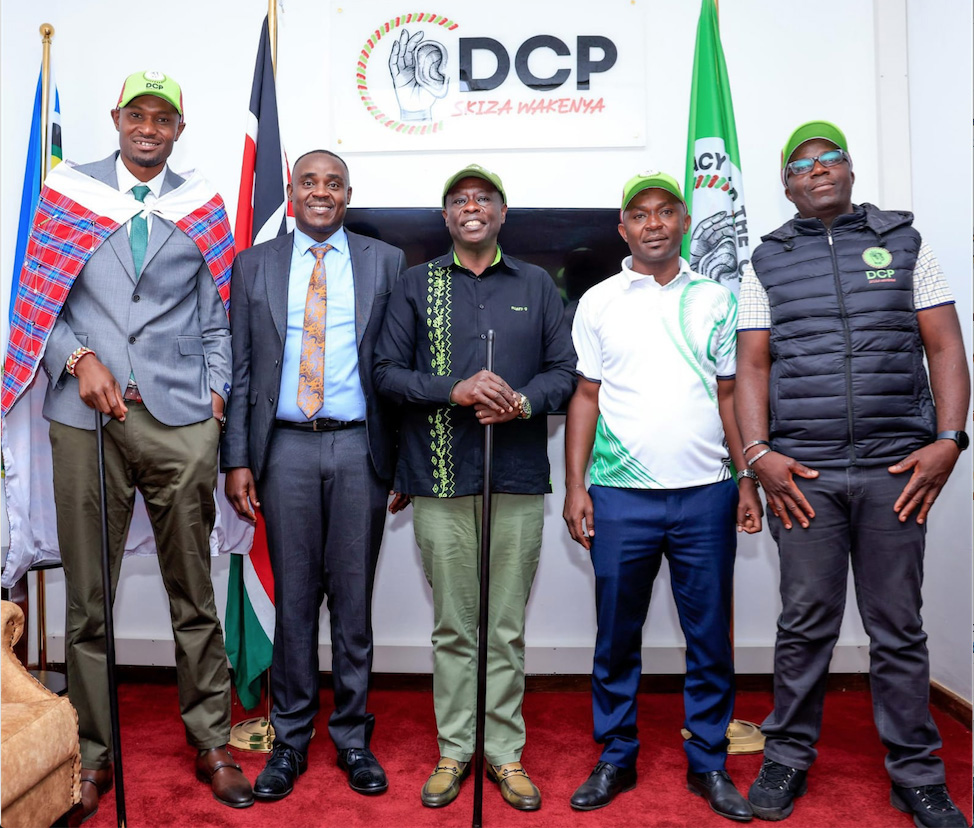
 Douglas Masikonde of Narok Town ward, DCP deputy party leader Cleophas Malala, party leader Rigathi Gachagua, David Warui of Kariobangi North ward and Aduda Okwiri of Kisa East ward. Masikonde, Warui and Okwiri won last month’s MCA by-elections/HANDOUT
When Douglas Masikonde of DCP clinched the Narok Town ward seat on November 27, it was more than a local victory—it was a political earthquake.
Against all expectations and despite
UDA’s full-court press, his win exposed the fragility of established
power networks, highlighted the limits of top-down endorsements, and signalled a
seismic shift in the county’s 2027 gubernatorial landscape.
In a race long dominated by party
machinery, the electorate’s verdict revealed a renewed appetite for grassroots
engagement, local loyalty and clan-based considerations—forces that could
redefine Narok politics for years to come.
Masikonde garnered 6,007 votes,
defeating UDA’s Robert Kanyinke, who secured 4,479, despite the
ruling party deploying its full political machinery.
Kanyinke, the eldest son of former MCA Lucas Kudate (deceased), was widely expected to win with the backing of Governor
Patrick Ntutu, Defence CS Soipan Tuya, former Governor Samuel Tunai, and
all Narok MPs.
For political observers, the
by-election served as a referendum on UDA’s grassroots strength.
The party, long viewed as the county’s dominant force, failed to mobilise its base effectively, highlighting vulnerabilities in its political structure.
Masikonde, by contrast, relied on
intensive grassroots engagement, aided by DCP national officials, and the
influential support of former Narok North MP Moitalel Kenta.
Kenta’s lone endorsement—despite his
second-place finish in the 2022 gubernatorial race on the Azimio ticket—proved
decisive, signalling a resurgence of his political clout.
Political analysts suggest Kenta is positioning for a strong return in 2027.
With an anticipated “Ilariak
Declaration” in January, he could emerge as a formidable challenger,
particularly if he consolidates Maa support and taps into minority communities,
potentially even allying with Jubilee to attract the sizeable Kikuyu vote, estimated
at more than 40,000 across the county.
Analyst Joseph Rono argues the electorate’s rejection was less about the DCP candidate’s appeal and more about frustration with perceived political imposition and internal party wrangles.
“Political machinery alone no longer wins elections,” Rono notes.
“Authentic connection and unity within parties
will determine 2027.”
He said UDA leaders
underestimated grassroots resentment and competing power blocs, turning a ward
election into a broader protest vote against political arrogance.
The by-election also laid bare the
rift between Governor Ntutu and Narok West MP Gabriel Tongoyo, both eyeing the
UDA gubernatorial ticket.
Their temporary alliance to campaign
for Kanyinke highlighted unresolved tensions, which analysts warn could further
weaken UDA’s cohesion.
Compounding the party’s challenges
is the ongoing Olkiombo land dispute in the Maasai Mara Game Reserve, involving
the governor’s brother, Livingstone Ntutu.
Legal battles over the 4,700-acre
parcel have intensified perceptions of conflict of interest, with Tongoyo
leveraging the issue to question Ntutu’s credibility. Analysts suggest this
controversy could shape UDA’s nominations and influence voter perceptions in
2027.
Masikonde’s victory has emboldened
smaller parties like DCP, demonstrating that performance, integrity and local
loyalty increasingly matter more than party affiliation.
As the county gears towards 2027,
political commentator Joseph Karia highlights that Maasai clan dynamics remain
decisive.
He said voters continue to weigh lineage, historical loyalties and clan allegiances, often overruling broader party strategies.
“Anyone ignoring clannism in Narok does so at their
own peril. Clan identity remains one of the strongest political currencies
among the Maa,” Karia said.
With Kenta preparing for a comeback,
UDA grappling with internal fractures and emerging parties gaining confidence,
Narok is poised for one of its most competitive gubernatorial races yet.
The by-election serves as a stark
reminder. In Narok, political machinery must now contend with voter agency,
localised mobilisation and the enduring influence of clan dynamics.
Douglas Masikonde’s Narok Town ward victory is a wake-up call for UDA and a signal of shifting political currents ahead of 2027. Despite backing from top county leaders, Kanyinke lost, highlighting the limits of party machinery in the face of local dynamics and voter agency. Masikonde’s grassroots strategy, coupled with Moitalel Kenta’s endorsement, underscores the enduring influence of personal networks and clan politics. The result exposes UDA’s internal fractures and voter dissatisfaction, suggesting that future elections will hinge on authentic engagement, coalition-building and sensitivity to local grievances, rather than reliance on endorsements or party dominance alone.