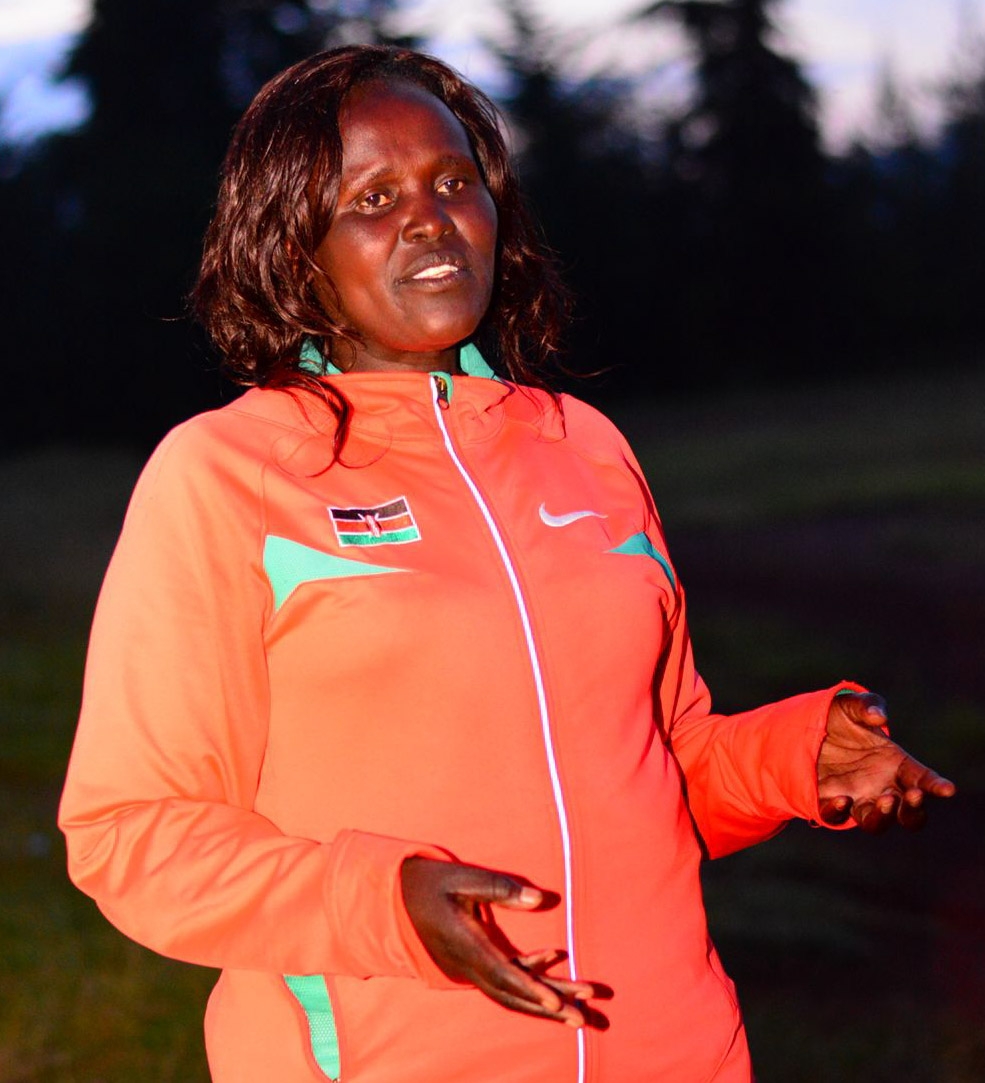


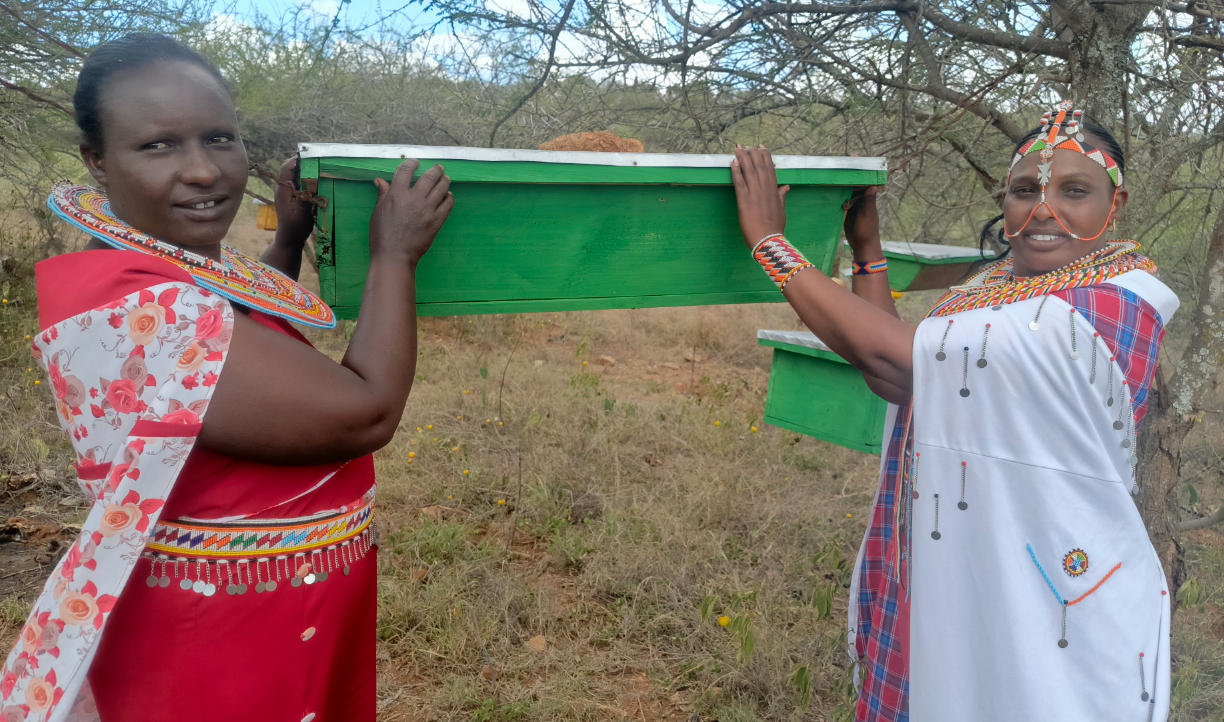
 Namelok Women’s Group chairperson Evelyn Naleku and group member
Elizabeth Kaparo in Doldol, Laikipia county /AGATHA NGOTHO
Namelok Women’s Group chairperson Evelyn Naleku and group member
Elizabeth Kaparo in Doldol, Laikipia county /AGATHA NGOTHO
Climate change has long threatened the livelihoods of pastoralist communities in Laikipia North’s Doldol area.
Years of unreliable rainfall, shrinking grazing lands and prolonged droughts have left families struggling to survive. But with every problem comes a solution, and the 200-member Namelok Women’s Group grabbed the opportunity.
“Our group started in 2023 to empower women through table banking,” says Evelyn Naleku, the chairlady.
“But we soon realised we needed stronger solutions because drought left us with nothing to eat. We used to wait for elders to bring food.”
Initially made up of women only, the group later incorporated seven men after undergoing gender and governance training.
“We learned that gender balance strengthens our work. Some tasks, like harvesting honey and landscape restoration, need men, so we included them.” Naleku said the group began with table banking, using the small loans to buy beads and produce beadwork for local and international markets.
“Trainings, mostly facilitated through Food and Agriculture Organization (FAO) expanded our skills. Women learned financial management, business skills and even land ownership rights. Before, many of us didn’t know we could own land,” she said. “FAO training changed that.”
Group secretary Rosemary Mosiany said beekeeping is their biggest success story.
“Before FAO support, we only had 10 beehives and sold raw honey at between Sh300-Sh350 per kilo,” she recalls. “Production was low and we didn’t know about the honey value chain.”
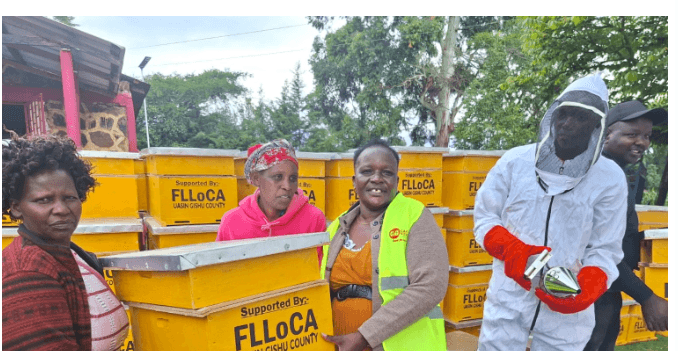
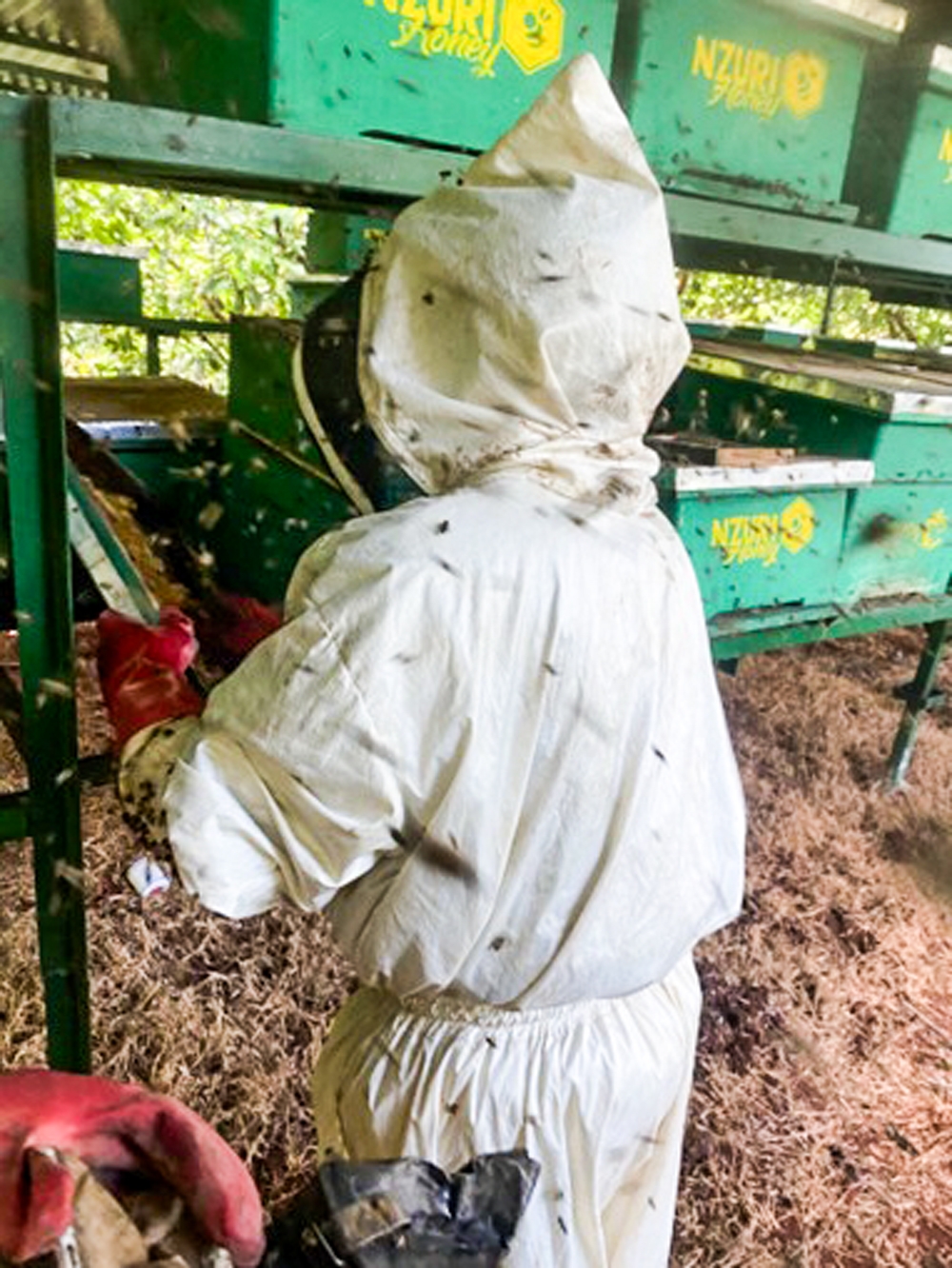
FAO later provided 40 modern beehives and trained members in honey harvesting, processing, value addition and marketing.
During an exchange visit to the Rachomo Honey Cooperative in Baringo, women learned proper packaging, branding and the economic value of products like beeswax, propolis and royal jelly.
“Now we process and brand our honey and sell a kilo at Sh1,000,” Mosiany said. “From a single harvest of about 370kgs, we earn around Sh370,000. The money goes into beadwork, livestock rearing, table banking and savings.”
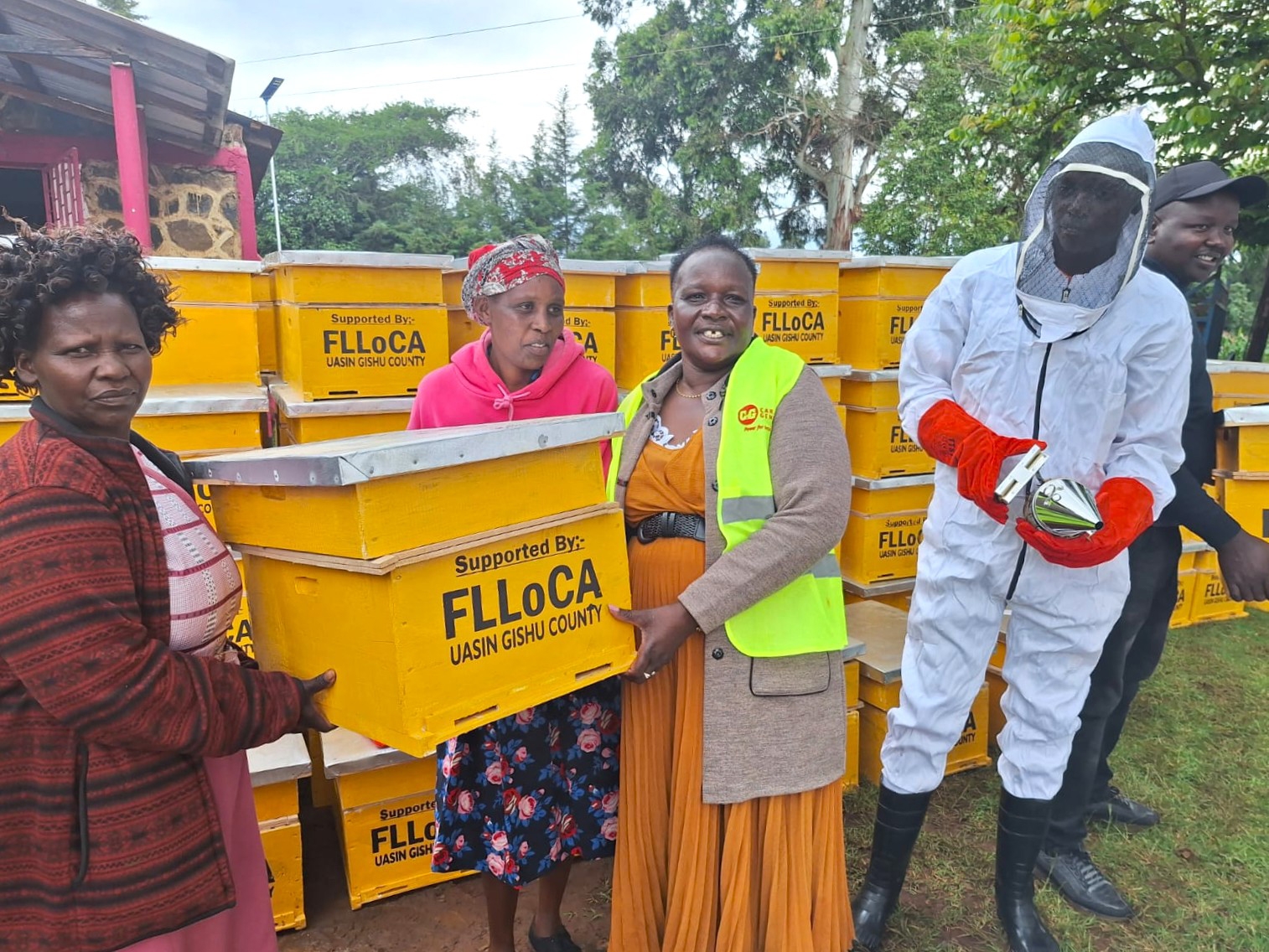
The group now owns 54 beehives, 40 from FAO, 10 from the Laikipia county government through the FLOCA programme and four from GAAF Women Rep.
Nearly every member has also invested in at least one personal hive.
She said training helped the women understand honey varieties, adding that they now harvest three times a year, branding their products according to the floral season.
“People used to think honey must be brown,” Mosiary said. “But we learned to identify water-white Acacia mellifera honey, mixed-blossom amber honey and others. This knowledge adds value because some types fetch higher prices.”
Mosiary is a role model within the group as she started keeping bees in 2019 and now has 480 hives and exports honey. “Women have realised that beekeeping can make you independent,” she said.
“Instead of cutting trees for charcoal, we teach them to keep bees. A single tree can host four hives, which is more profitable than burning it,” she added.
The group dreams of forming a cooperative capable of exporting five to six tonnes of honey annually.
“We already have the market, the only problem is shortage. But with more training and more people joining beekeeping, we believe we can meet export targets,” she said.
Naleku said beekeeping has become a lifeline, especially during drought when livestock die or fail to produce milk.
“When it’s dry, we sell honey to buy food and milk,” she said. “Our kitchen gardens give us vegetables, so our children no longer suffer malnutrition like before. Selling honey also enables women pay school fees and support household needs without relying fully on livestock, which are increasingly vulnerable due to climate shocks.”
Local leaders have taken notice. John Saikong, senior chief of Mumonyot location, said the women have transformed the community through their ventures and have become role models.
“They are very active. They make money from honey and vegetables, send their children to school and teach others. They also promote gender balance by including men in their work.”
FAO Kenya Natural Resource Management programmes officer Ann Mbutura said the project seeks to provide additional income and strengthen their resilience.
She said the Namelok Women’s Group is one of 14 groups supported under the Forest and Farm Facility Resilience Project.
In 2023, the group received a Sh3.1 million direct beneficiary grant, enabling them expand their activities and strengthen governance.
“We trained them on leadership, financial management, record keeping and gender inclusion,” she said. “When we started, they didn’t have men in the group. Now they have included seven, strengthening decision-making and labour.”
Mbutura said their village savings and loans portfolio has grown significantly to Sh600,000 in borrowings and Sh900,000 in savings, this has seen members invest in water tanks, poultry and kitchen gardens.