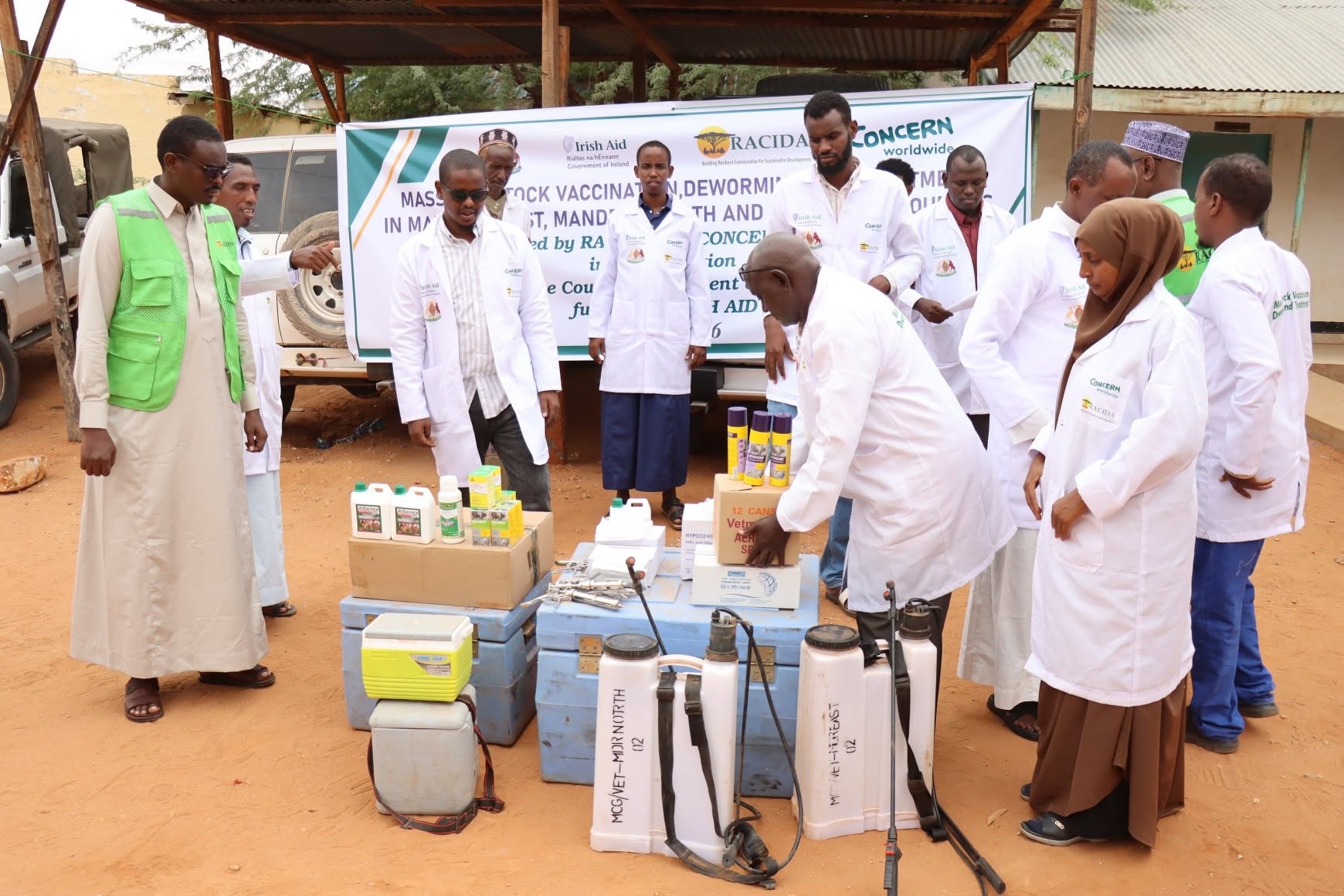
 Veterinary teams get ready for the exercise /STEPHEN ASTARIKO
The Mandera Veterinary Services department has launched a 15-day livestock vaccination and treatment campaign targeting thousands of animals across the county.
The
exercise, carried out in partnership with the Racida Hanano Programme and funded by Irish aid through Concern Worldwide, targets Mandera East, Mandera North and Banisa-Kiliwehiri subcounties.
It aims to enhance livestock health and safeguard the livelihoods of pastoral communities, which largely rely on livestock production as their primary source
of income.
Under the
campaign, veterinary teams aim to vaccinate 112,500 sheep and goats against
Peste des Petits Ruminants, deworm 120,000 livestock against internal
parasites, spray about 5,000 camels against ticks and provide
treatment for various livestock infections.
The
initiative will also include farmer sensitisation programmes on zoonotic
diseases, antimicrobial resistance and disease prevention measures.
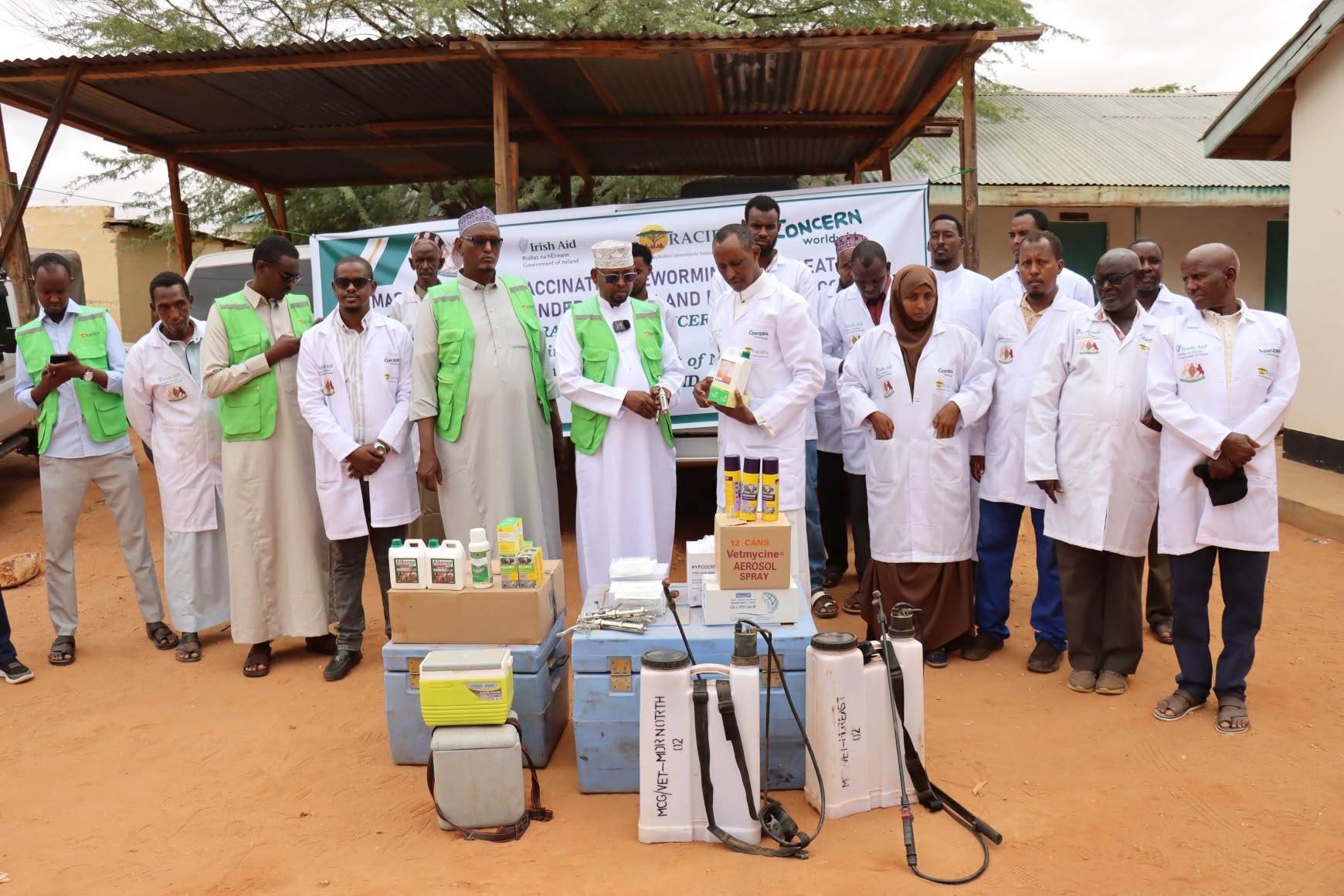 Veterinary teams are ready for the exercise./STEPHEN ASTARIKO
Speaking during the launch, Agriculture executive Barre Shabure said the intervention is intended to enhance community resilience.
"We encourage all livestock owners to
participate in large numbers so they can fully benefit from the services
being offered during this exercise," Shabure said.
The
campaign comes as Mandera County continues efforts to rebuild its livestock
sector following the devastating 2022–23 drought, which resulted in massive
livestock losses and dealt a significant blow to the local economy.
Mandera
Governor Mohamed Adan Khalif reaffirmed his administration's commitment to
investing in the livestock sector, describing it as the backbone of the
county's economy.
"Mandera
people are predominantly pastoralists. This makes livestock the backbone of our
economy," he said during a recent function.
"For that reason, we will continue allocating adequate resources to boost the sector and improve the livelihoods of our people."
The
governor said his administration has implemented several measures to
cushion pastoralists against future shocks, including facilitating the
registration of livestock keepers under the livestock insurance programme.
He
recalled that the prolonged drought of 2022-23 caused livestock deaths valued
at about Sh11 billion, severely affecting households that rely on
livestock production.
"Despite
the setback, the county did not despair. We stood firm, joined hands and sought
external support to ensure our people remained hopeful as we continued
rebuilding their livelihoods," he said.
Khalif said the county has made significant progress in restoring the
livestock sector through extensive vaccination campaigns that have immunised
thousands of animals against major livestock diseases.
"To
strengthen disease monitoring and response, capacity-building initiatives saw
26 technical staff trained in participatory epidemiology and antimicrobial
resistance," the governor said.
"While 60 community disease reporters were equipped with the knowledge and skills needed to enhance disease surveillance across the county."
County
officials expressed optimism that the ongoing vaccination and treatment
campaign will further reduce disease prevalence, improve livestock
productivity and strengthen food security and household incomes among pastoral
communities.
The
exercise is expected to reach thousands of livestock owners across the targeted
subcounties over the next two weeks, contributing to the county's broader
efforts to build a resilient and sustainable livestock sector.
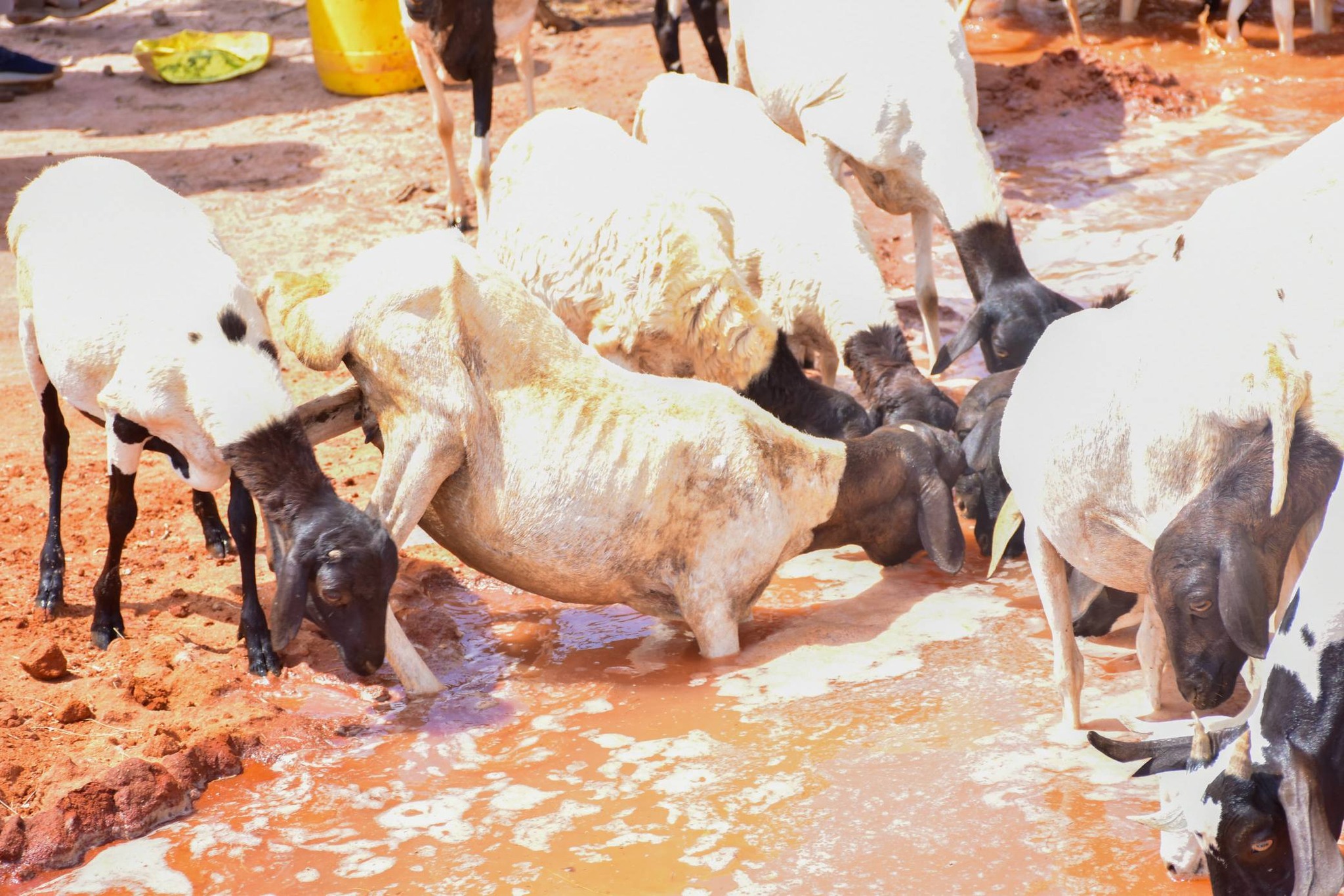 Sheep drinking water./STEPHEN ASTARIKO
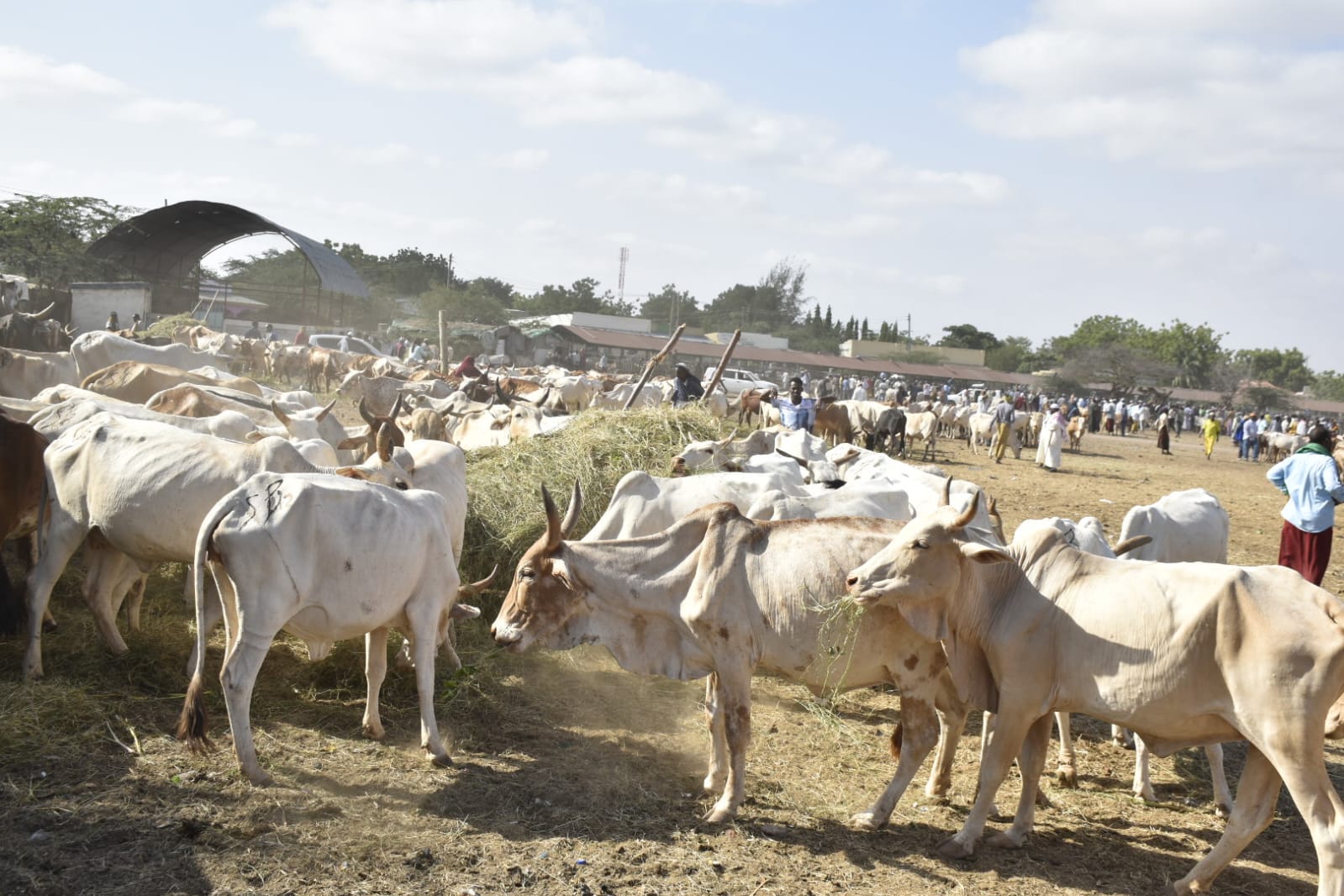 Cows at the Mandera livestock market. The county has launched a major livestock vaccination drive to safeguard pastoralist livelihoods