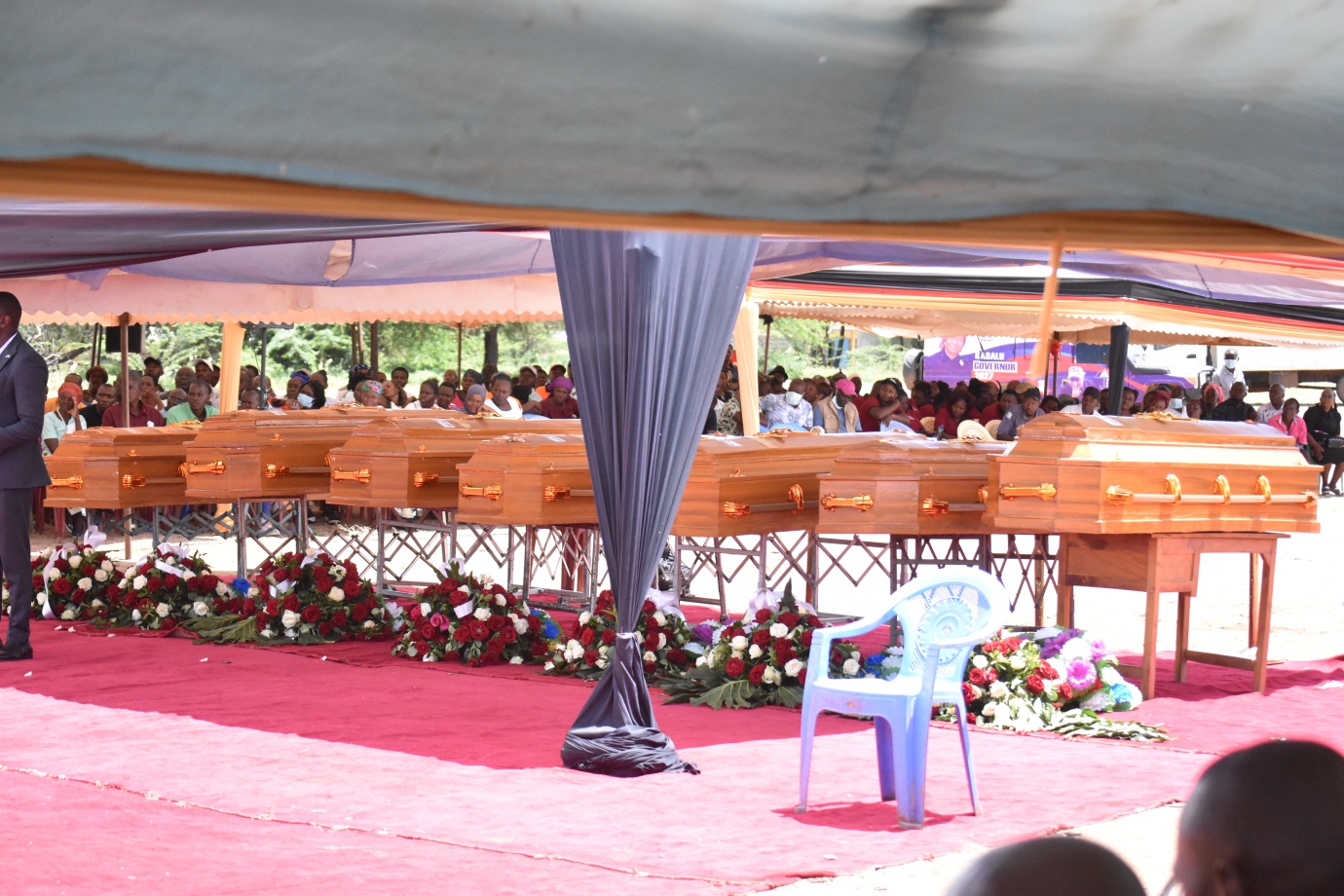
 Caskets of the seven people who were killed by camel herders
at Kwa Kamari during the funeral service at Tseikuru Primary school a couple of
weeks ago/Musembi Nzengu.
Caskets of the seven people who were killed by camel herders
at Kwa Kamari during the funeral service at Tseikuru Primary school a couple of
weeks ago/Musembi Nzengu.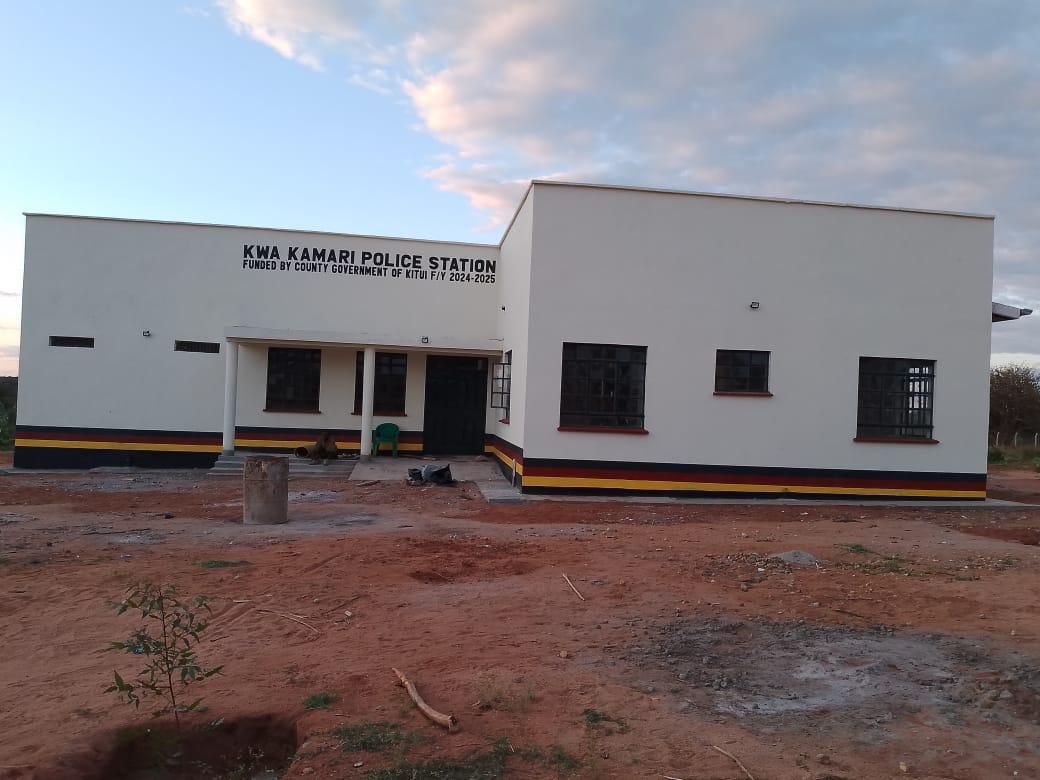 Kwa Kamari police station where the high eve security meeting
was held on Saturday/Musembi Nzengu.
Kwa Kamari police station where the high eve security meeting
was held on Saturday/Musembi Nzengu. Kitui County Commssioner Erastus Mbui/Musembi Nzengu.
Camel herders on Friday launched another deadly attack at Itimba Ithei near the Kwa Kamari area in Tseikuru, Kitui county, where seven people were killed only weeks ago.
Kitui county commissioner Erastus Mbui said one man was shot dead while watering his livestock at the Itimba Ithei watering point inside the Mwingi Game Reserve.
Three goats were also killed in the attack, which occurred at about 12.30pm on Friday.
Mbui dismissed earlier media reports that claimed four people had been killed, clarifying that only one person lost his life during the raid.
The latest attack happened barely 10km from the scene of the April Kwa Kamari massacre, raising fears among residents over renewed insecurity.
In response, a high-powered security delegation led by the principal deputy to the Deputy Inspector General of Police, Patrick Tito, visited the area on Saturday.
The team was tasked with assessing the security situation and exploring measures to prevent further attacks in Mboka, Katumba and Itimba Ithei.
It held a high-level security meeting at Kwa Kamari Police Station, where Tito reaffirmed the government's commitment to tracking down and arresting those responsible for the attacks.
“The deliberations focused on enhancing operational strategies to safeguard lives and property, and to restore public confidence and normalcy in the region,” the team said in a statement.
The statement added that Tito assured residents that the National Police Service would deploy additional personnel and resources to strengthen security operations in the affected areas.
The security team also met residents at Kwa Kamari shopping centre, where they reassured them of the government's commitment to guaranteeing their safety.
Earlier, Tseikuru deputy county commissioner Annette Mwangi said a contingent of security officers had been dispatched to the area immediately after the attack to pursue the assailants.
She said the gunmen found residents watering their livestock and opened fire indiscriminately. As people fled for safety, their animals were left unattended and scattered in different directions.
On April 25, seven people were massacred at Kwa Kamari near the Mwingi National Game Reserve when gunmen believed to be camel herders raided the area in what was widely described as a revenge attack.
The conflict between the invading camel herders and local Kamba farmers is believed to have started on March 29, when camel herders allegedly killed a Kamba herdsman at Itimba Ithei.
The following day, in what was suspected to be a retaliatory attack, four members of the camel-herding group were reportedly shot with arrows by local residents.
The incident is believed to have triggered the revenge attack that later left seven Kamba residents dead.
The latest attack in Kitui highlights the fragile security situation in areas affected by recurring clashes between camel herders and local communities. Lasting peace will require more than security deployments. Addressing the root causes of the conflict, including competition over grazing land, water resources and cycles of retaliation, will be crucial in preventing further bloodshed and restoring public confidence.